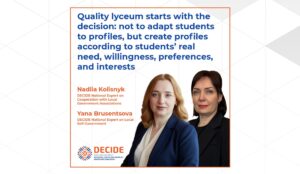

In fact, this process requires a much deeper analysis: first of all, the number of future high school students and teaching staff, the availability of an appropriate material and technical base, the ability of the institution to offer different profiles (at least three), and other prerequisites that will affect the quality of educational services received by high school students.
We would like to share with you the experience of the front-line Trostyanets urban territorial community, which is in Sumy region – a partner community of the DECIDE project.
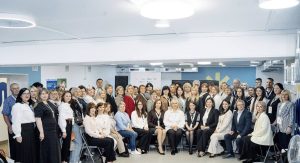
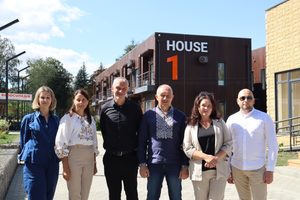
During April-June 2026, national expert Яцковський Сергій and a team of regional experts consisting of: Alla Bondar, Олена Гуленко, Юрій Орел held a series of consultations with community representatives. Together with the community leadership, education department employees, and heads of educational institutions, they analyzed the current school network and possible models for its transformation.
At the beginning of the consultations, the community considered the possibility of creating three academic lyceums. However, a detailed analysis of the student contingent, demographics, location of the institutions, security situation and legislative requirements showed that such a model needs to be revised.
As a result of the joint work, a different approach was developed: at the transitional stage (until 2030), it is proposed to leave two academic lyceums in the community, and in the future, taking into account the above factors, one powerful institution of specialized secondary education will be formed. Such a model will allow students to choose their own educational trajectory, the opportunity to have more than 6 profiles in lyceums, and, at the same time, will allow for the effective use of community resources.
The experts paid special attention to:
- determining future training profiles based on surveys of students and parents and existing personnel and material and technical prerequisites;
- bringing the structure of academic lyceums in line with legislation;
- training teaching teams to work in a specialized high school;
- developing career guidance and partnerships with higher education institutions and employers;
- establishing intermunicipal cooperation with neighboring communities.
In particular, Trostyanets hromada plans to cooperate with Boromlya hromada (Боромлянська територіальна громада), where the creation of an academic lyceum is not planned. The next step should be to prepare an appropriate cooperation agreement so that students from the neighboring community can receive specialized secondary education in Trostyanets lyceums.
An important result of the consultations was not only the proposed model of the future network. The community also prepared presentation and communication materials that it can use in further work with deputies, the public, potential donors, and partners.
As the head of the education department of the Trostyanets city council (Тростянецька Міська Рада), Anna Zubova, notes: “The consultations gave us not only answers to difficult questions about the future network, but also tools for further work. Thanks to the experts, we already have a presentation that will help us present our model in a reasoned manner to various audiences – from deputies and parents to potential donors. This is important, because the success of the reform largely depends on open communication and trust in the decisions made.”
The experience of Trostyanets municipality shows: the main goal of the reform of the senior specialized school is not a formal reduction or renaming of institutions, but the search for a model that takes into account the real needs of children, the capabilities of the community and ensures high-quality specialized education for years to come.
Upon request, experts continue to provide advisory support to communities on the creation of academic lyceums and the formation of an effective senior school network. If you represent a community and want to receive practical expert advice – leave a request via the link.
The DECIDE project is implemented by the DOCCU and Zurich University of Teacher Education – International with the support of the Embassy of Switzerland in Ukraine / Посольство Швейцарії в Україні.

About DECIDE
The Swiss-Ukrainian Project – ‘Decentralisation for Improved Democratic Education’ (DECIDE) is being implemented in Ukraine by the NGO DOCCU in partnership with the Zurich University of Teacher Education (Switzerland). The project is funded by the Swiss Confederation through the Swiss Cooperation Office in Ukraine.
The Project supports two key reforms: education and decentralisation.
Read more about our work.