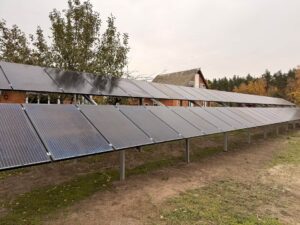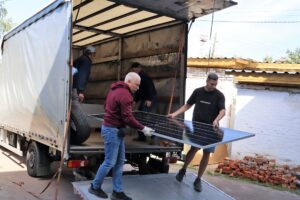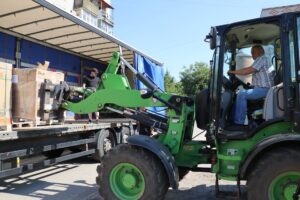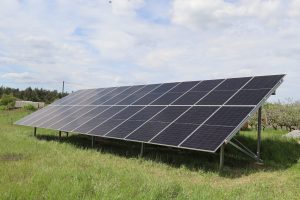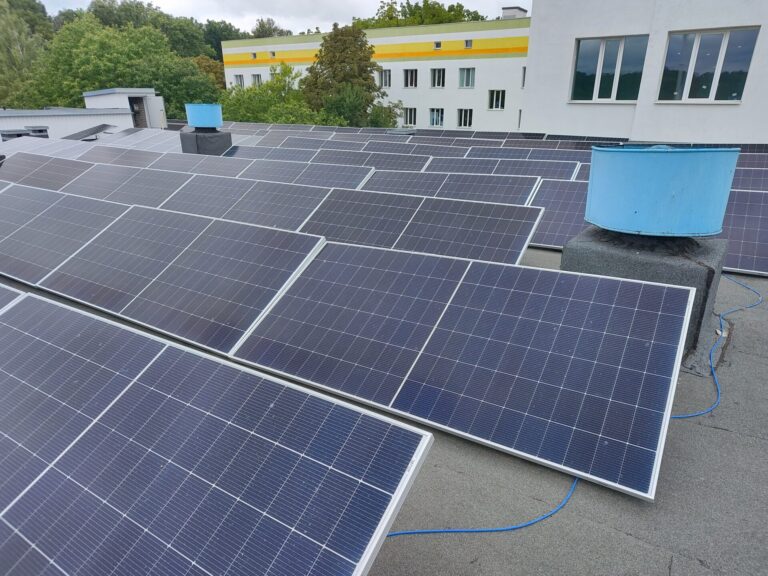
Trostyanets is actively developing solar energy by installing solar power plants on the roofs of healthcare and educational facilities, administrative buildings and other municipal properties.
By generating its own electricity from the sun, the community significantly reduces its electricity costs, saves public funds and strengthens its energy independence.
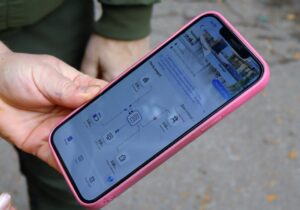
Monitoring data show that over the first nine months of 2026, solar and wind power plants at municipal facilities in Trostyanets city generated 173.3 MWh of electricity. This already saved UAH 2.127 million of public funds!
Solar power generation at selected facilities:
Trostyanets City Council — 21,610.9 kWh
Trostyanets City Hospital — 99,452.5 kWh, including:
- Children’s Complex — 28,771.4 kWh
- Inpatient Building — 58,981.1 kWh
- Infectious Diseases Building — 8,700 kWh
- X-ray Room and Assembly Hall — 3,000 kWh
Education Department — 25,337.8 kWh, including:
- Nursery-Kindergarten “Romashka” — 10,259.2 kWh
- Nursery-Kindergarten “Kazka” — 12,093.4 kWh
- Kindergarten “Kalynka” — 2,985.2 kWh
- IDP Centre “Neskuchne” — 6,238.7 kWh
- Hotel “Trostyanets” — 6,572.3 kWh
- Hotel “Elegia” — 9,611.1 kWh
- Water tower on Dokuchaieva Street (solar power plant installed in May 2026) — 3,815.4 kWh
- FC Trostyanets Stadium (solar power plant in operation since 6 August 2026) — 688.3 kWh


WHAT’S NEXT?
In 2026, our hromada will continue installing solar power plants at municipal facilities. This will further reduce electricity consumption from the grid and ease the burden on the municipal budget. The main goal is to equip all publicly funded institutions in the community with solar power in the coming years, which is expected to save up to UAH 10 million a year.
One of our priorities is full energy independence for Trostyanets City Hospital, one of the largest electricity consumers in the city. A wind power plant was recently installed and connected near the hospital and is already operating. The municiplaity plans to use part of the savings from renewable energy to provide additional financial incentives for medical staff.
A solar power plant was recently installed on the roof of Lyceum No. 2, and similar equipment is now being installed at Lyceum No. 3. By the end of 2026, we plan to equip its water intake facilities and sewage pumping stations with solar power plants. This will make the water supply more reliable and help avoid increases in water tariffs for residents.
Solar power plants will also continue to be installed on the City Council’s administrative buildings. This will not only reduce electricity costs but also keep municipal offices running during power outages, so that residents can continue to receive essential administrative services.
City hromada is moving confidently towards energy independence and sincerely thanks all the international partners supporting this important programme. Thanks to these joint efforts, the city is becoming more resilient, modern and self-sufficient.
Special thanks to: Greenpeace International, GIZ Ukraine, Engagement Global, the Municipality of Montabaur Montabaur erleben, Firma Kremer-Kautschuk-Kunststoff GmbH & Co. KG, BIOHAUS-Stiftung, Greenpeace Deutschland and Camino NGO.
Trostyanets City Council continues its systematic work to attract international assistance and strengthen the hromada’s energy resilience. While much has already been achieved, a great deal of work still lies ahead. We are open to cooperation with international partners, charitable foundations and organisations willing to support our community on its path towards maximum energy self-sufficiency.
We call on international partners, charitable foundations and donor organisations to join us in implementing energy projects in Trostyanets city hromada. We especially hope for the support of Nefco in Ukraine and Life Line Ukraine. Together, we can make our municipality more resilient to the challenges of war, keep critical infrastructure running reliably and improve the quality of life for our residents!