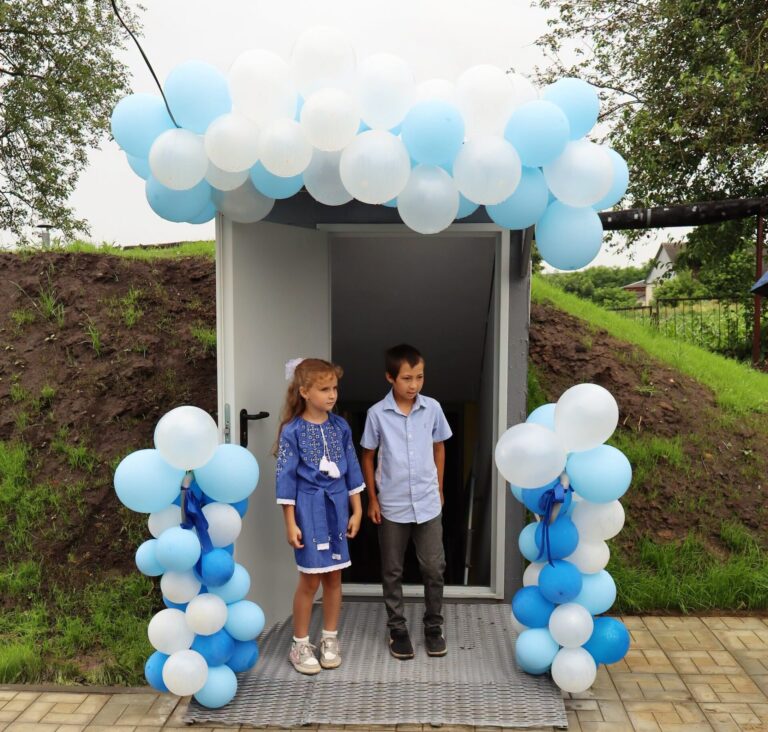

In Trostyanets city hromada, an important step toward creating safe learning conditions for children in rural areas has been completed—the construction of shelters in rural schools. Last November, thanks to financial support from our international partner GIZ Ukraine, construction began on two modular semi-underground shelters in the villages of Lyudha and Stanova. Each shelter is designed to accommodate 50 people. Today, these facilities are ready to shelter children and residents of these communities in the event of an air threat.
Currently, the modular shelters have been installed, waterproofing has been completed, ventilation has been set up, water, heating, and sewer systems have been connected, stairs have been installed, interior finishing work has been carried out, the shelters have been backfilled with soil, and the areas around the structures have been landscaped. In addition, the structures are energy-independent: they are equipped with inverter-based battery systems, so even during power outages, children will be able to continue their studies.
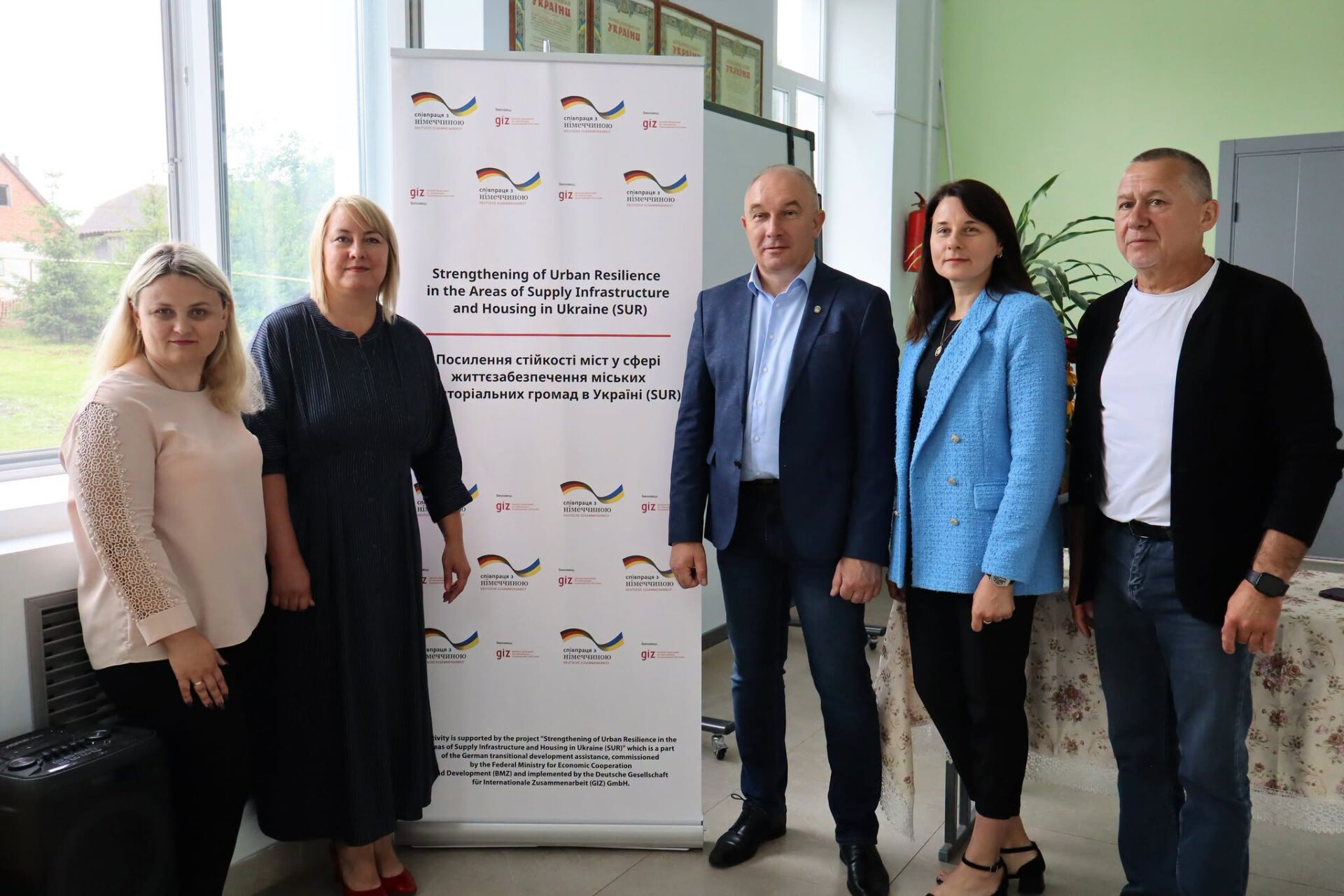
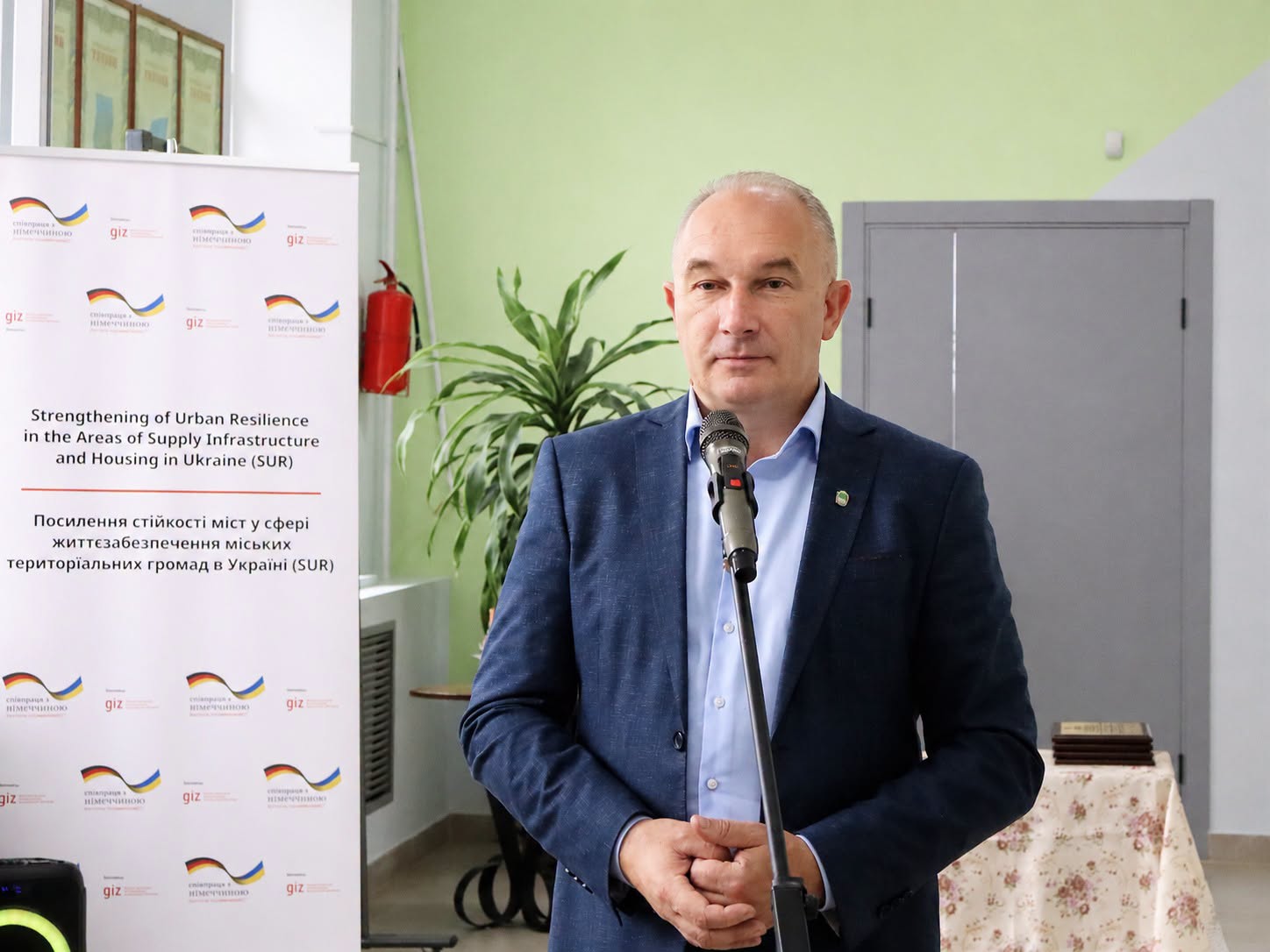
“The new protective structures will make it possible to ensure the continuity of the educational process in two more rural schools. We know that online learning can never replace live interaction between children, their teachers, and classmates. Children have long dreamed of returning to learning in their classrooms. After all, a village school is the heart of the village. These structures are another step towards ensuring that the community can live and develop despite all the challenges of the war“, – said Yurii Bova, Mayor of Trostyanets.
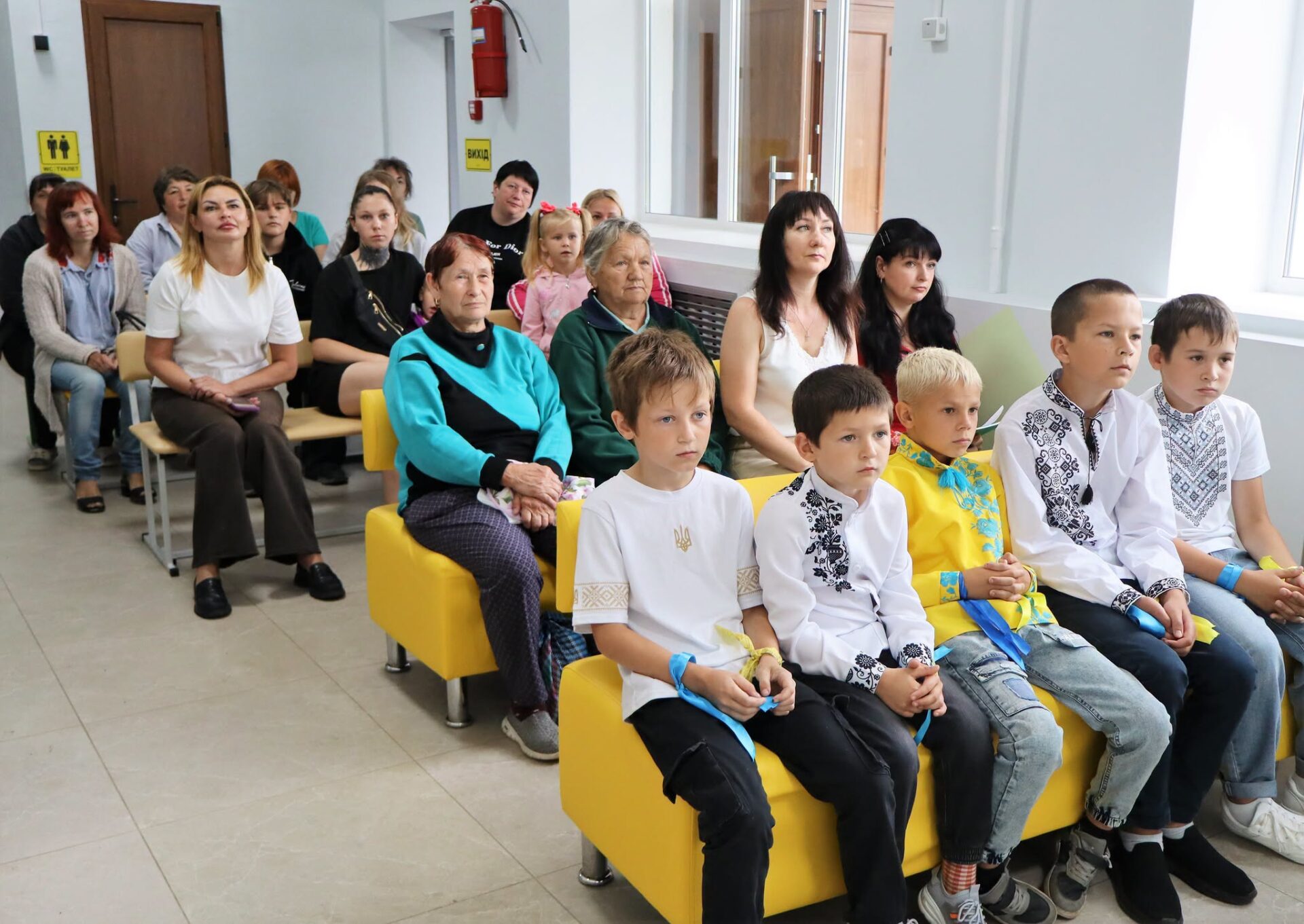
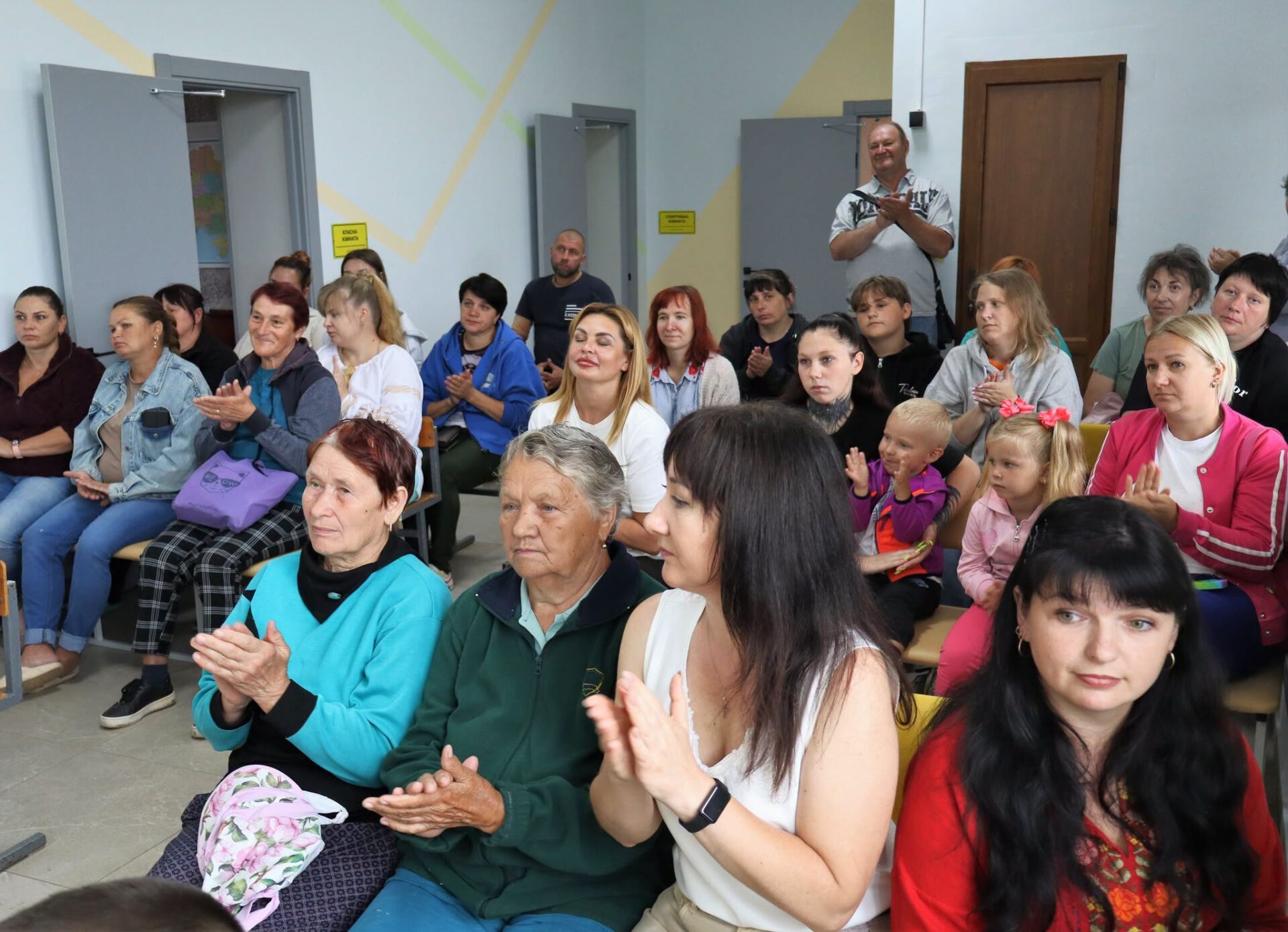
The structures were designed to ensure the continuity of the educational process and enhance the safety of students and educational staff amid constant security threats. As a result, 119 students and educational staff now have access to equipped protective structures that make it possible to organise learning in line with safety requirements.
Educational institutions in frontline communities continue to operate under constant security threats. Damage to educational infrastructure and regular shelling continue to limit children’s access to in-person education. Creating safe conditions for learning is therefore an essential part of supporting communities, strengthening their social resilience, and helping children return to in-person education.
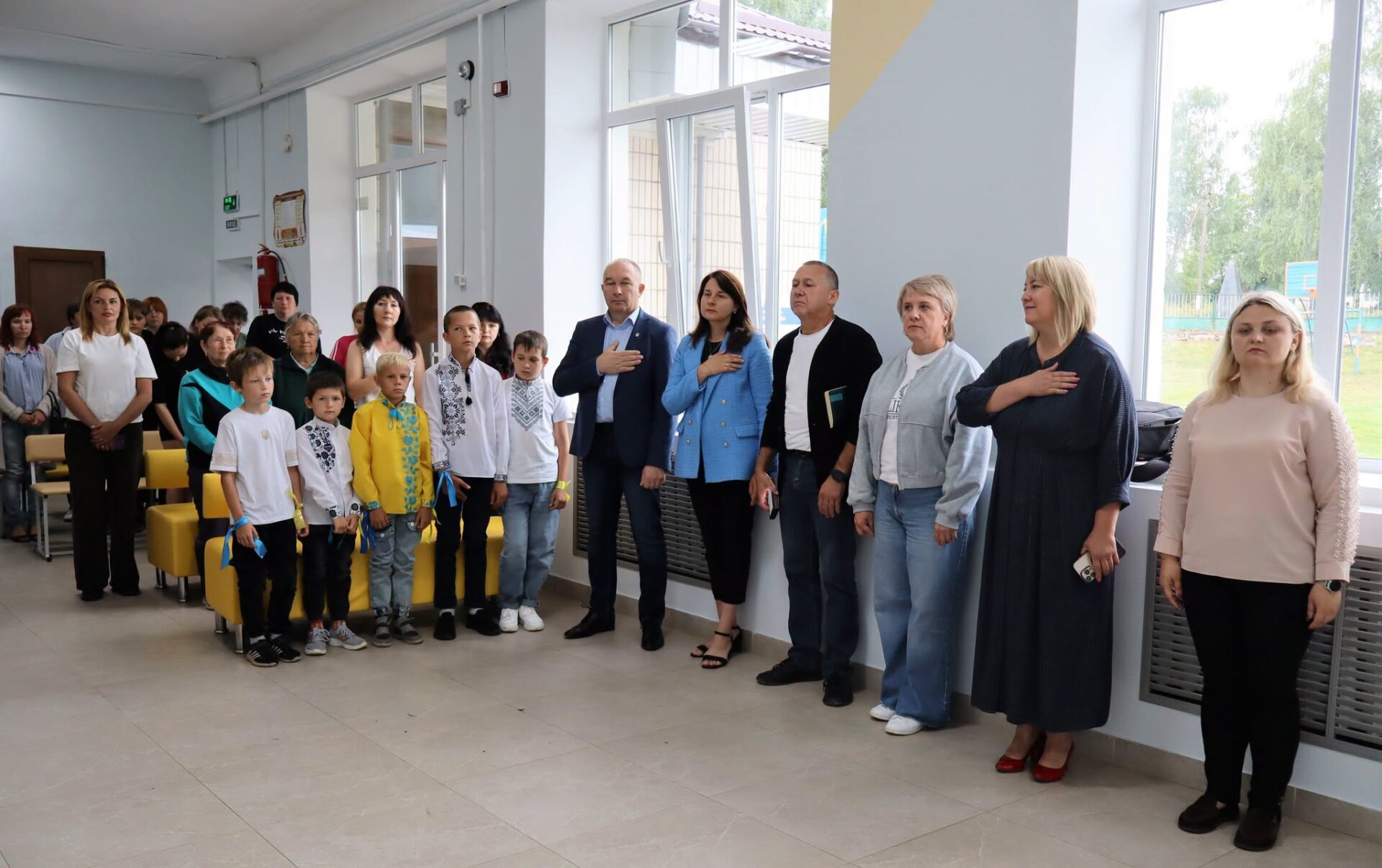
The solution was developed together with local partners, taking into account safety, technical and organisational requirements. The temporary civil protection structures are located next to the educational institutions, have two entrances/exits in line with safety and evacuation requirements, and can accommodate up to 50 people each. As the schools operate in two learning shifts, the structures have sufficient capacity to accommodate everyone present during a single learning shift.
As Igor Steinke, Project Advisor at GIZ, noted, access to in-person education has faced significant challenges since 2020, when the COVID-19 pandemic first disrupted learning across Ukraine. Since the beginning of Russia’s full-scale invasion, the situation has become even more difficult, particularly in frontline communities. Creating conditions that allow children to safely return to in-person education therefore remains a key priority.

The activities were implemented within the project “Strengthening of Urban Resilience in the Areas of Supply Infrastructure and Housing” (SUR), which is part of German transitional development assistance, commissioned by the Bundesministerium für wirtschaftliche Zusammenarbeit und Entwicklung (BMZ) and implemented by Deutsche Gesellschaft für Internationale Zusammenarbeit (GIZ) GmbH.