Education in Ukraine has recently been a whirlwind. First, the COVID-19 pandemic forced children to switch to distance learning. Then, Russia’s full-scale war turned the whole process upside down. For almost two years now, the learning process has been constantly interrupted by the sound of sirens and sometimes even explosions. The forced break in learning, damaged schools, power cuts, online lessons, and stress—all these factors have caused huge educational gaps. To bridge the gaps in education in Ukraine, we launched a four-month tutoring programme at our Digital Learning Centres (DLCs). In this article, we will tell you how we work and how we help children catch up and regain their curiosity and thirst for knowledge.
Educational opportunities
Educational catch-up programmes are a common practice in the developed world. Following the acute phase of the COVID-19 pandemic, countries in Europe and America began conducting sociological research to stop academic regression. The British conducted the most thorough analysis. They were the first to launch models of remedial courses and tutoring programmes. The British model largely inspired the movement of the Ukrainian education system in this direction.
“According to various statistics, the average student is currently at least one year behind in their educational development. This is a proven statistic, and various rating scales show this not only in Ukraine. But we are in an extraordinary situation in that we have moved smoothly from COVID to war. Therefore, this problem not only persists, it is getting worse,” says Natalia Kozmenko, a Project Specialist at People in Need.
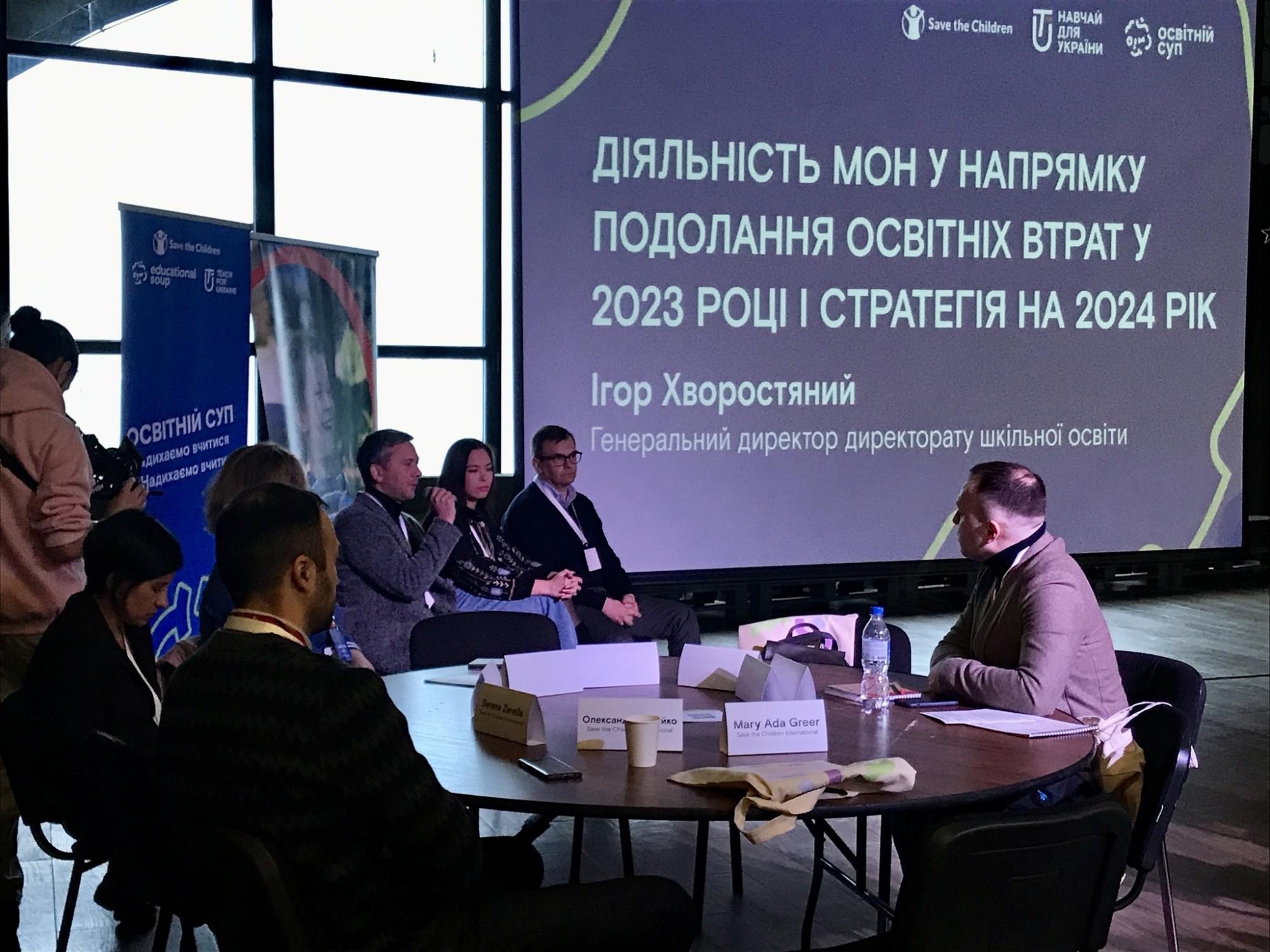
The Ministry of Education is working to solve the problem. Humanitarian organisations that are more flexible in terms of tools have also joined the effort. At People in Need, we understand the critical role of education in society, and we are determined to help children catch up.
Getting started
The impetus for the project to overcome educational losses came from our Be Smart Digital Learning Centres (DLCs). We opened DLCs in six cities in Sumy Oblast as a supplement to traditional education. At Be Smart, schoolchildren were able to study remotely, do their homework, and attend various workshops. The goal of the project was to provide children with educational and psychosocial support. In the summer, the centres also run camps. And in September, parents and teachers noticed positive changes in the children.
“Both parents and teachers noted the difference between children before and after attending the centres. And they pointed out that the children’s morale had changed. Because they received assistance from us. And their academic performance was also changing. What we did during the camps affected the results they got in their studies,” says Natalia.
Considering these results and assessing our own capabilities, our team launched a programme to make up for educational losses. Before starting, we did extensive research. We held meetings with government officials, parents, and school staff. We interviewed about 370 teachers. They named the subjects in which students lagged the most. These were Ukrainian, English, mathematics, history, and natural sciences.
“So far, we have decided to focus on mathematics and the Ukrainian language, the two subjects in which students will have to take the national multi-subject test or external independent testing, if it resumes soon,” says Liudmyla Chorna, the project’s Chief Specialist People in Need.
Who are the tutors?
The next step was to select tutors, i.e. teachers who would help children catch up with the programme. Our team members were looking not just for subject teachers but for those who are constantly learning themselves, following modern trends, and developing professionally.

“A tutor is an interesting person who conducts classes engagingly, who makes you interested in the subject, his behaviour, and teaching method. And you don’t feel like you’re in a regular class. You feel that you are in a group of like-minded people,” says Liudmyla.
There were 20 selection criteria for future tutors. Applicants filled out a thorough questionnaire that we developed. The questions focused on personal traits, behavioural patterns in conflict situations, professional competence, ability to set goals, predict and consider risks.
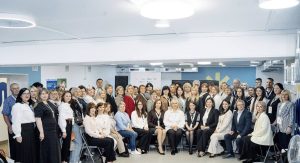
From 70 candidates interviewed, 18 were selected.
“Recruiting human resources was probably the most difficult. Because most Ukrainian teachers are now overworked, they work in 2-3 shifts, offline and online. In addition, our programme is something new. Not all teachers were ready to agree to it right away,” says Liudmyla.

The difference between a school lesson and a lesson with a tutor
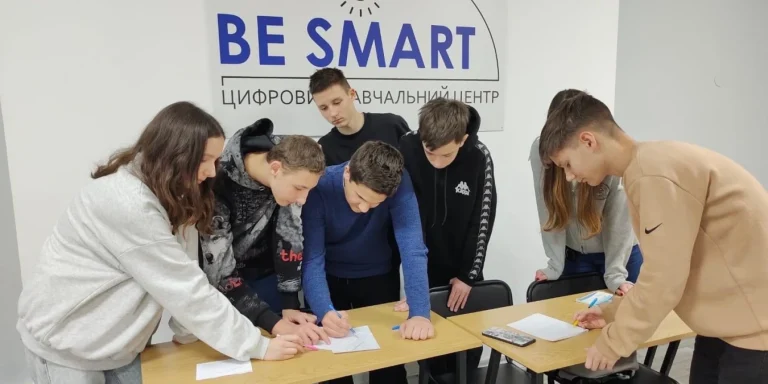
A lesson with a tutor takes place in a small group of up to 10 children, twice a week. A subject map is drawn up for each student, where gaps in knowledge are recorded. Children are not given grades. Students receive consultations on their level of development compared to the previous period.
“We identify only those needs that are specific to a particular child. For us, the main thing is to return the pupil to the desired position, which is declared either by the child or their parents, where they have recorded a decline in the level of knowledge,” Natalia noted.
The tutoring programme is designed to be active for 4 months. It is expected that during this period, children in grades 5 and 9 will receive strong individual support. But a tutor should not just come and give an extra lesson. They must excitingly present the topic and grab the student’s interest. After all, children may have low motivation to study subjects or phenomena whose benefits are not entirely clear to them.
“A tutor is not a provider of educational services. This is a person who shows the value of learning. If a student understands why they are studying a certain topic, if they see the connection between the topic and real life, it has a great impact on motivation,” Liudmyla emphasises.
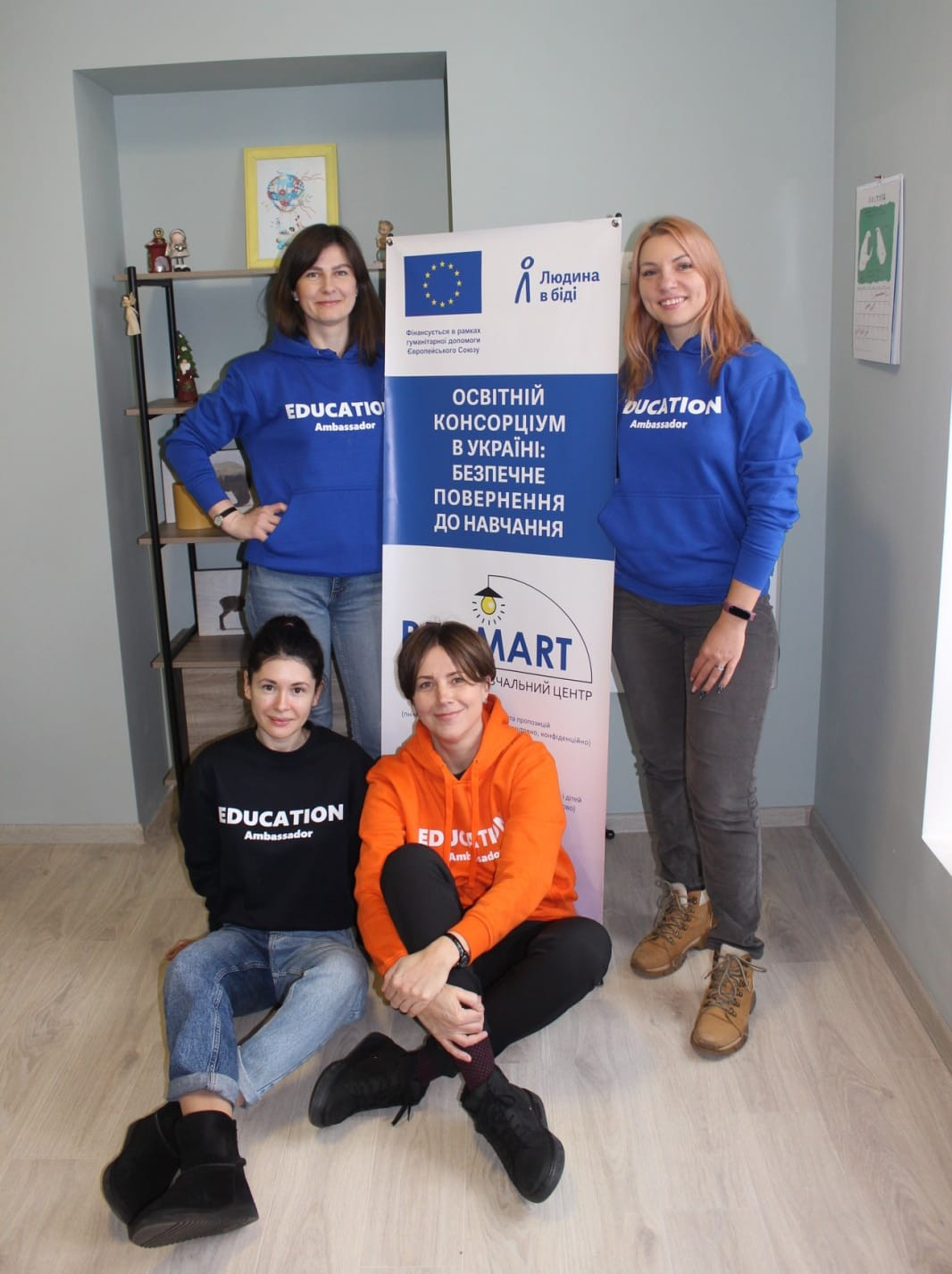
Irritation, stress and constant tension from the war also have a significant impact on the desire to learn and learning performance. Rocket attacks, power outages, lessons in shelters, and an unfavourable family atmosphere are just some of the problems that young Ukrainians face. That is why psychosocial support is another integral component of the tutoring programme.
“We show children that they can learn without stress. Not in the way the formal system offers it: come, open a notebook, complete the task, get an A or D. Without discussing these results. Often, teachers are very limited in time and resources to find out these reasons. And we are here to find out why the child is failing. Sometimes, a child just needs to be levelled in their psycho-emotional state. And this can be enough,” Natalia Kozmenko said.
Tutoring classes were launched in 5 cities in Sumy Oblast: Shostka, Konotop, Krolevets, Trostianets and Lebedyn. More than 300 students have signed up for classes. We hope to give children a powerful boost. We want them to keep their interest in learning even after the programme is over.

Author: People in Need