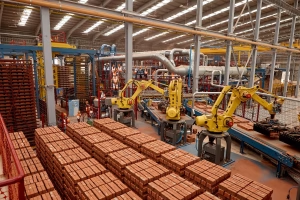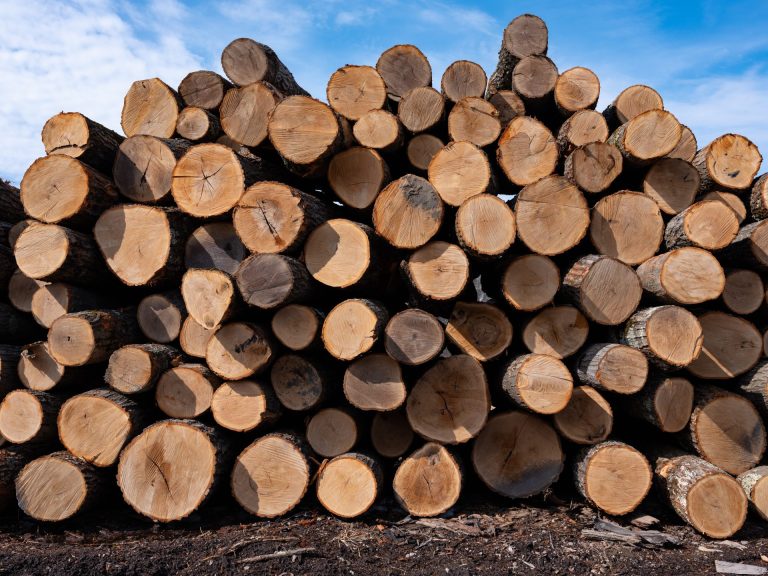
A separate area of investment in our community is the woodworking industry and the export of oak and ash products.
On the territory of the Trostyanets city hromada, the area of forests is 29,961 hectares, of which 27,392 hectares are hardwoods, 5,271 hectares are coniferous trees, and 2,743 hectares are softwoods.
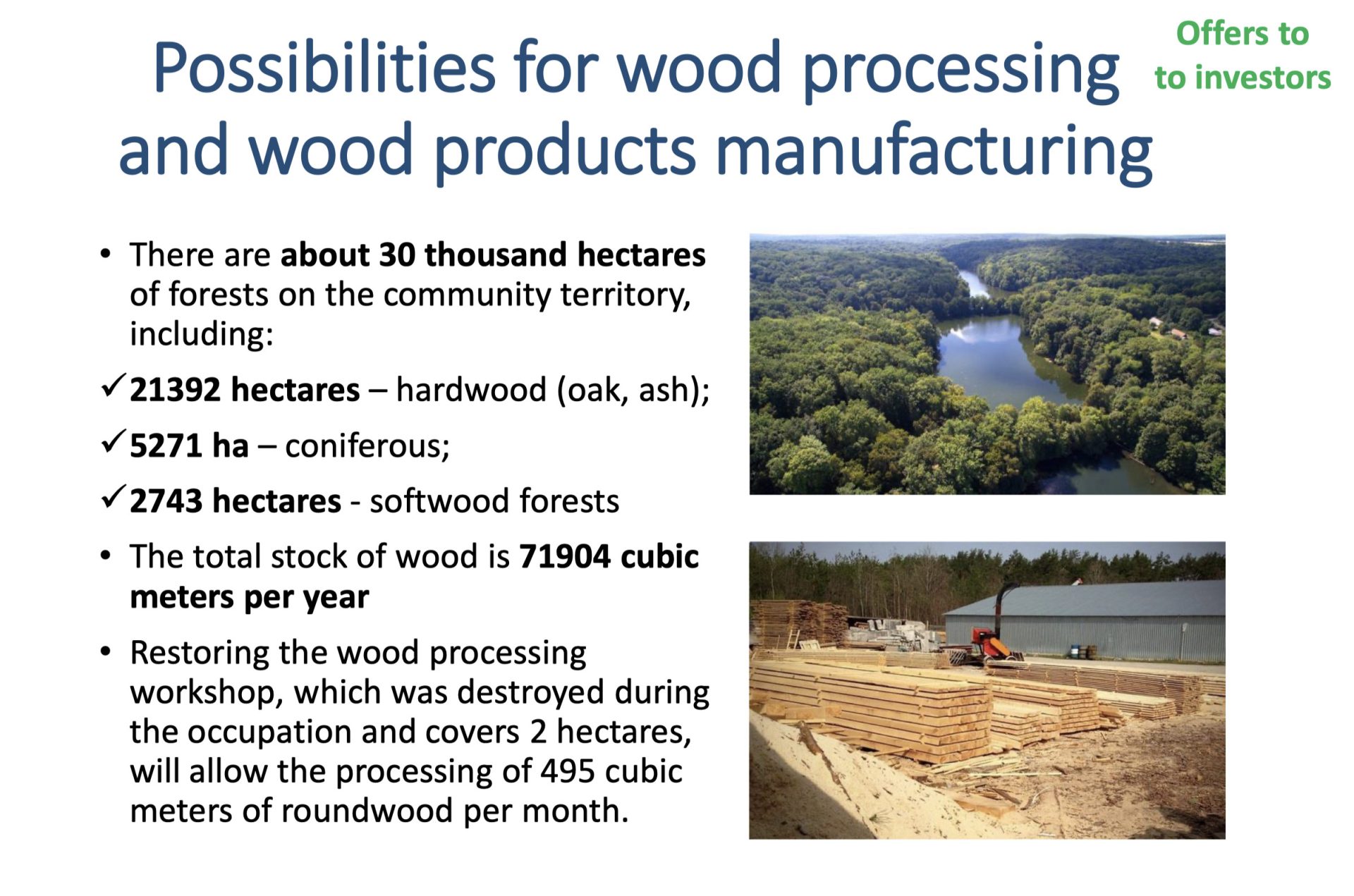
The annual stock of industrial timber is 71,904 m3. The average age of forests is 76 years.
Both state-owned enterprises and private companies work in this area. One example is One Parquet Company, which specializes in the production of parquet and other wood products.
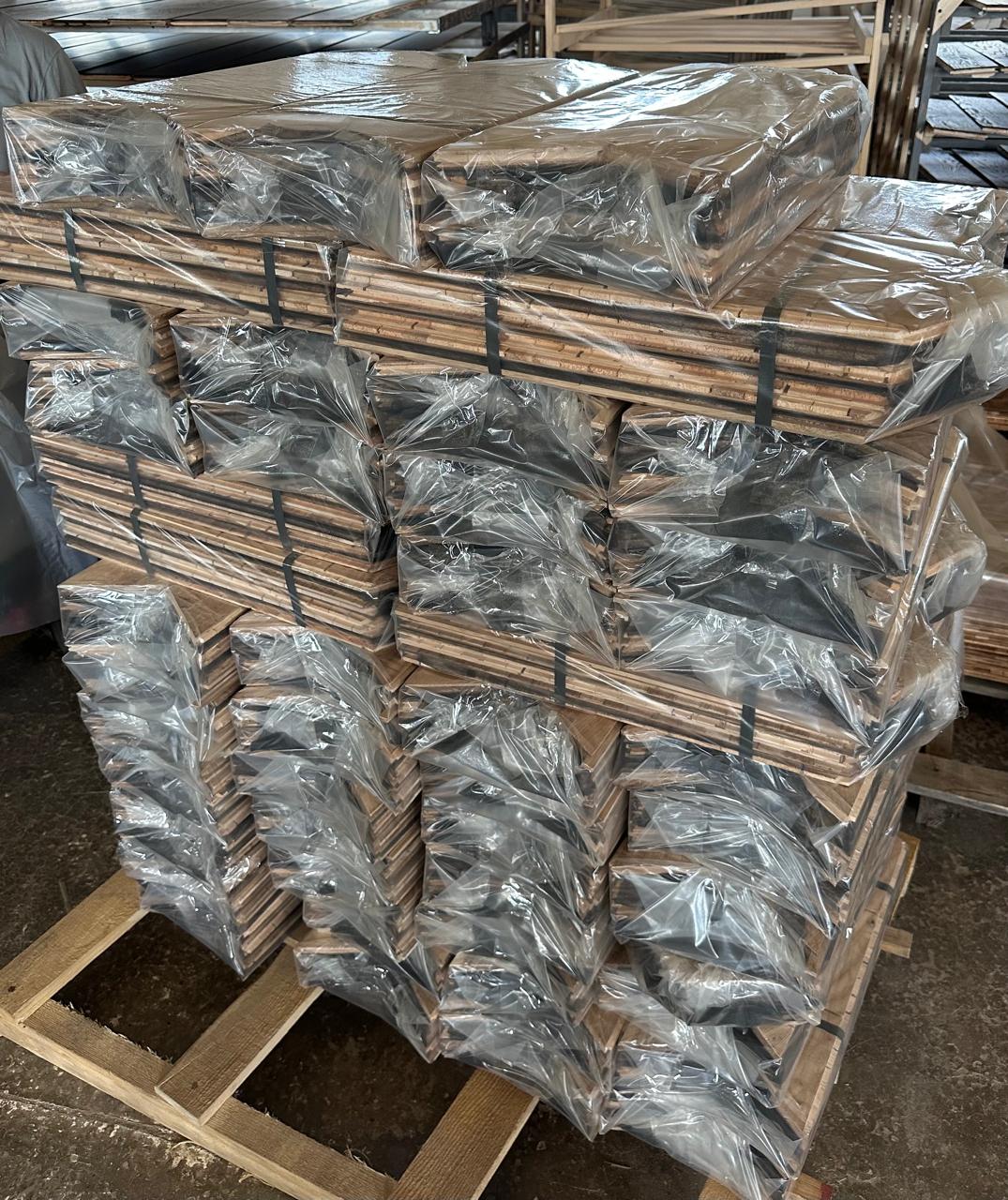

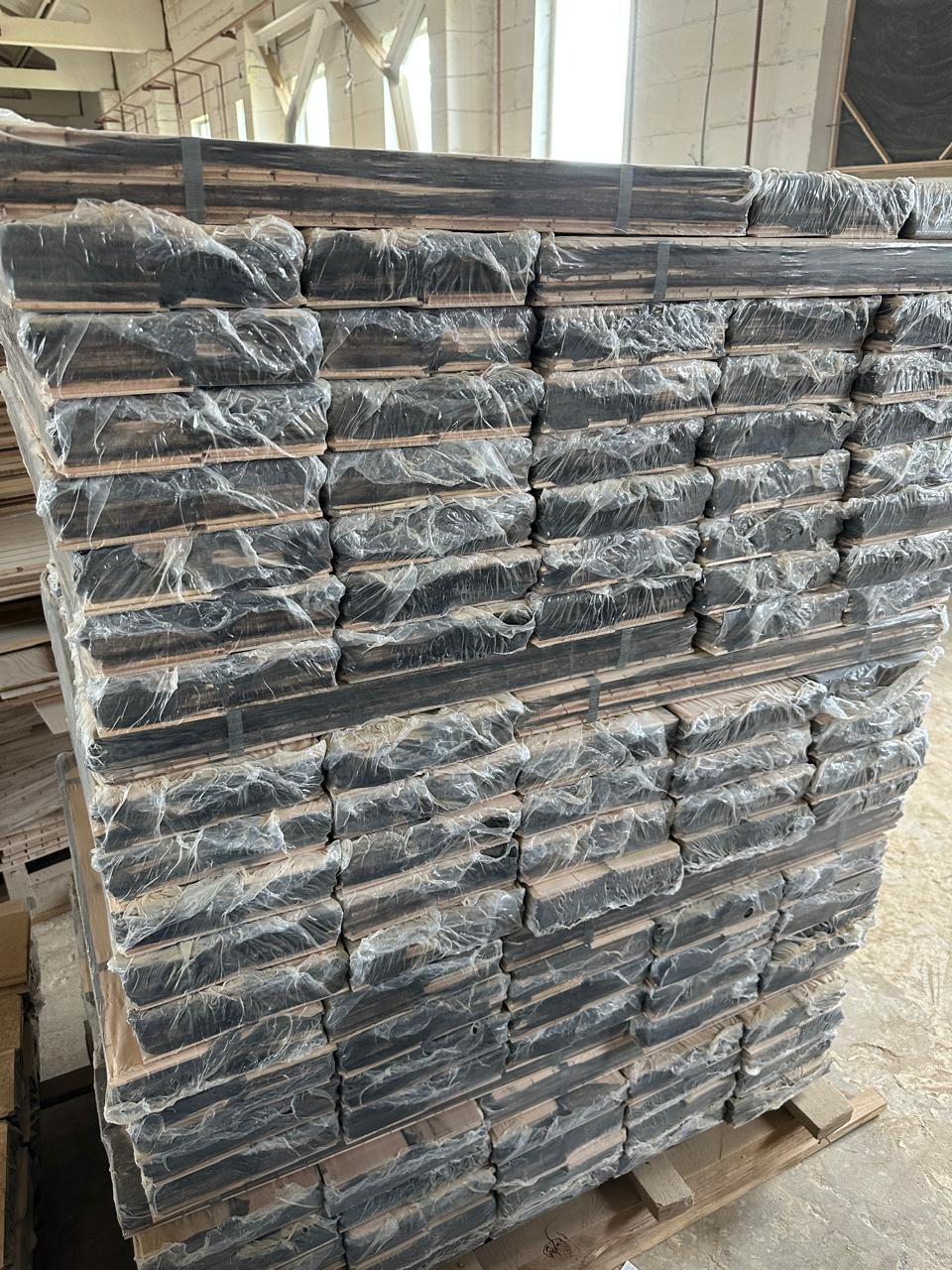
Production potential: given the structure of the existing forests, facing sheets, veneer, various joinery and carpentry products, furniture, parquet boards, fiberboard, chipboard, plywood, etc. can be produced.
Cooperation formats: individual orders, production according to specifications, supply of raw materials, investments in already operating business entities; possible production of blanks for finishing in Italy.
Infrastructure: 5 business entities engaged in wood processing; plots for woodworking shops in the industrial park; possibility of rail shipment of pallets/containers.
The global woodworking and hardwood industry is pivoting toward premiumization, sustainability, and warm, minimalist aesthetics. Oak and ash remain highly sought after for cabinetry, flooring, and furniture. Exporters face evolving environmental regulations and shifting regional supply lines that demand careful logistical planning.
Current Market Trends for Oak and Ash
- Aesthetic Shifts: Interior design trends favor natural grain patterns and warm, light tones in oak, maple, and cherry.
- Premium Demand: High-quality White Oak continues to drive global hardwood volume and revenue.
- Ash Resilience: Ash is seeing modest resilience and steady pricing in Europe due to tighter supply.
- Market Growth: The broader hardwood market continues to steadily expand, fueled by commercial renovations and sustainable building practices.
Export Dynamics and Trade Logistics
Global timber trade requires careful adherence to regional trade policies and environmental standards. Exporters are contending with:
- Compliance: New regulations, such as the European Deforestation-free Regulation (EUDR), require rigorous, plot-level documentation and geolocation.
- Regional Price Fluctuations: Hardwood pricing and supply dynamics fluctuate significantly by region, requiring businesses to track shifting market valuations.
- Tariffs and Trade: Evolving trade policies and import duties continue to impact North American and European lumber flows.
Key Woodworking and Export Resources
To navigate the complexities of the global timber and woodworking market, the following verified industry resources provide critical data, market forecasting, and commercial connections:
Industry Insights & Market Data
- Accio: Explore Trend of Successful Wood Products in 2026 for deep-dive product insights and growth strategies.
- Global Wood Markets Info: Access reports detailing European hardwood lumber prices diverge in first quarter of 2026 to track regional valuation shifts.
- Wood Vendors: Read Hardwoods in Transition: How the Market Shifted from 2025 to 2026 for an analysis of how modern craftsmen utilize premium hardwoods.
- Miller Wood Trade Publications: Monitor regional demand and supply shifts in West Coast Business Trends April 2026.