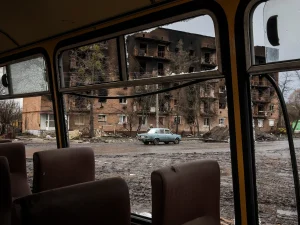

The small town of Trostyanets in the Sumy region, 35 kilometers from the Russian-Ukrainian border, was known before the war only through the local chocolate factory.
Russian troops entered here on the very first day of the invasion, February 24. There were no soldiers or weapons in the city, so there was no possibility of resistance.
Trostyanets was only liberated on March 26 , after several days of fierce fighting between the occupiers and the Armed Forces of Ukraine.
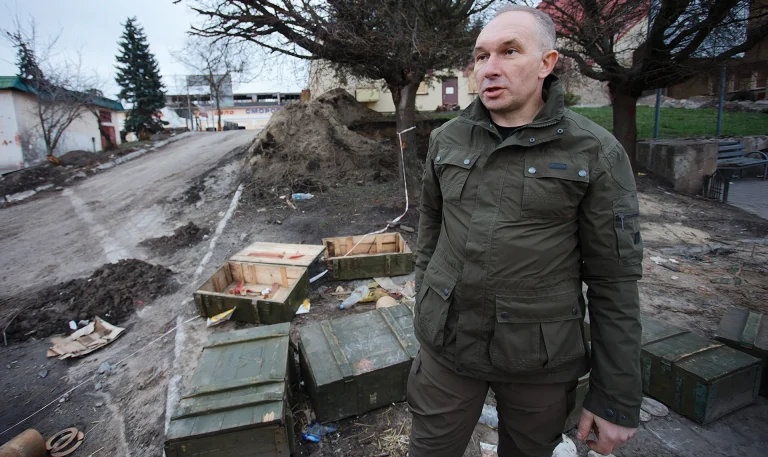
“Late in the evening I was informed that the Russians had gathered and left,” says Yuriy Bova, who has been the mayor of Trostyanets for 17 years.
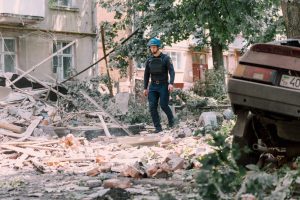
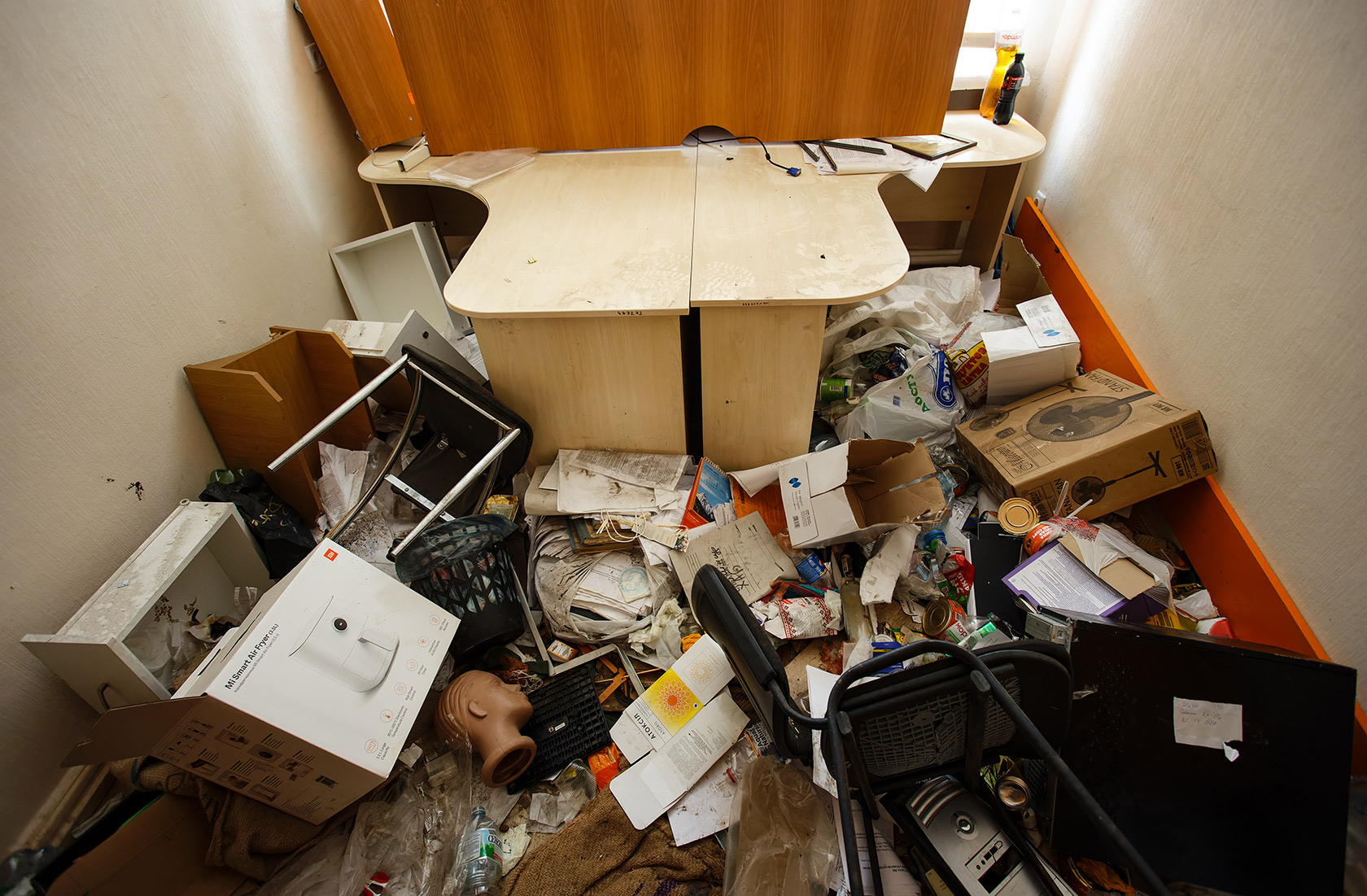
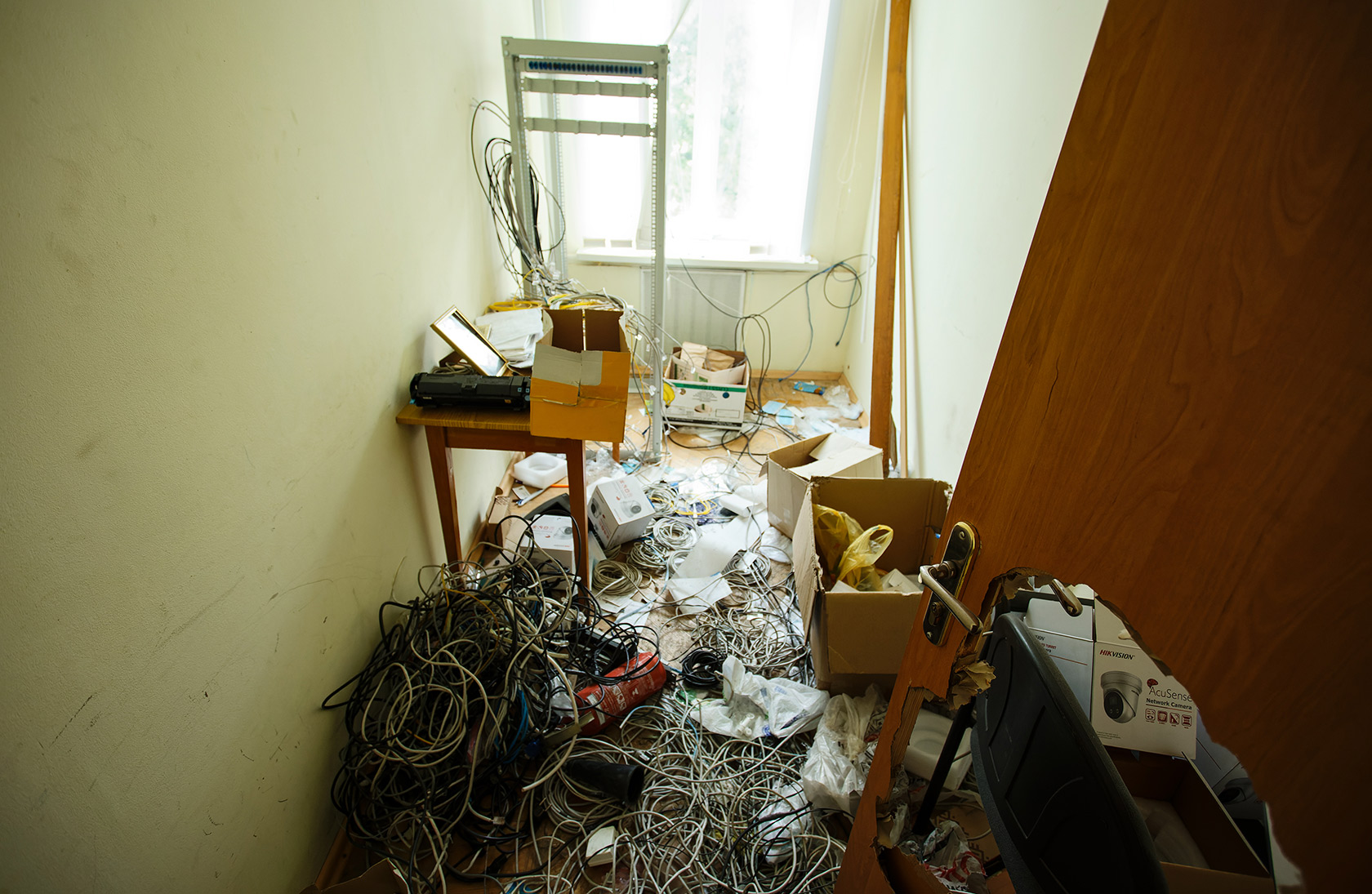
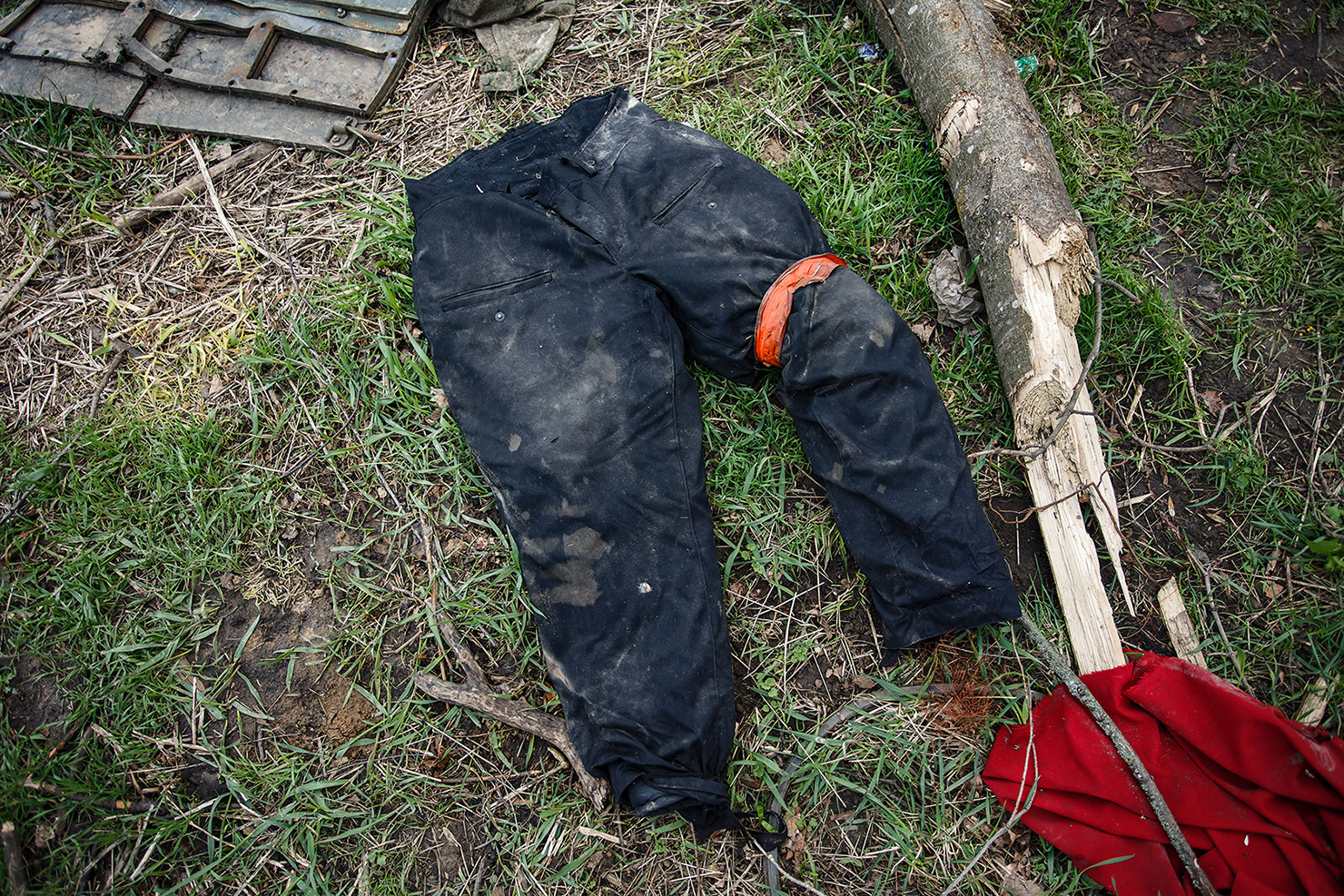
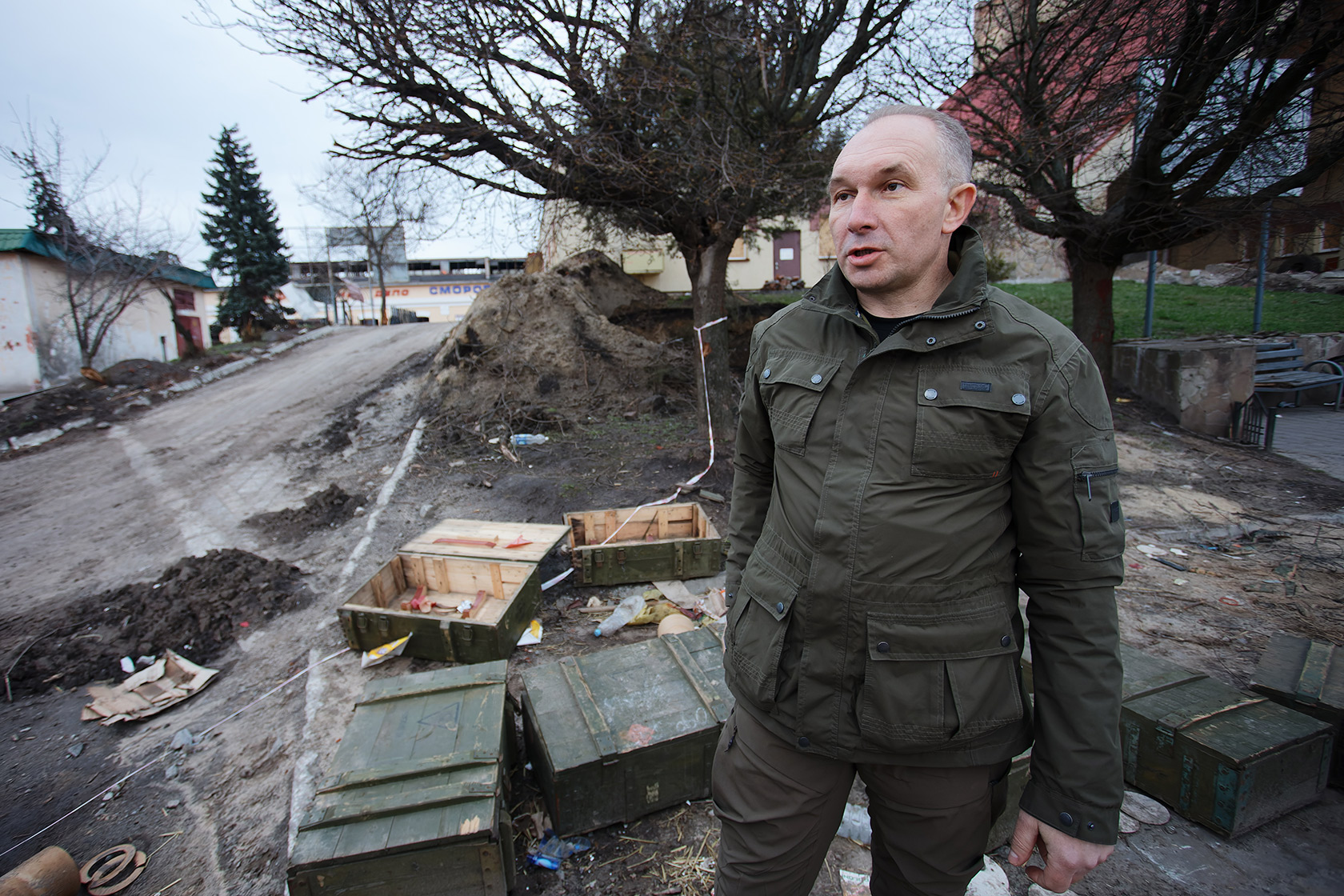
In his car, he gives UP journalists a tour of the liberated city. The car now replaces Bovi’s office – the Russian soldiers have chosen the city council building as their headquarters . Almost all the windows in the building are broken, there is still a pile of garbage, the remains of dry rations, empty vodka bottles and a military uniform covered in blood.
Therefore, in Bova’s white Toyota, there was his bulletproof vest with the city’s coat of arms, applications for joining the Terro Defense from local residents, and other signed documents and personal belongings.
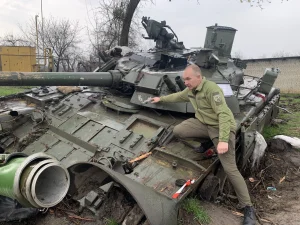
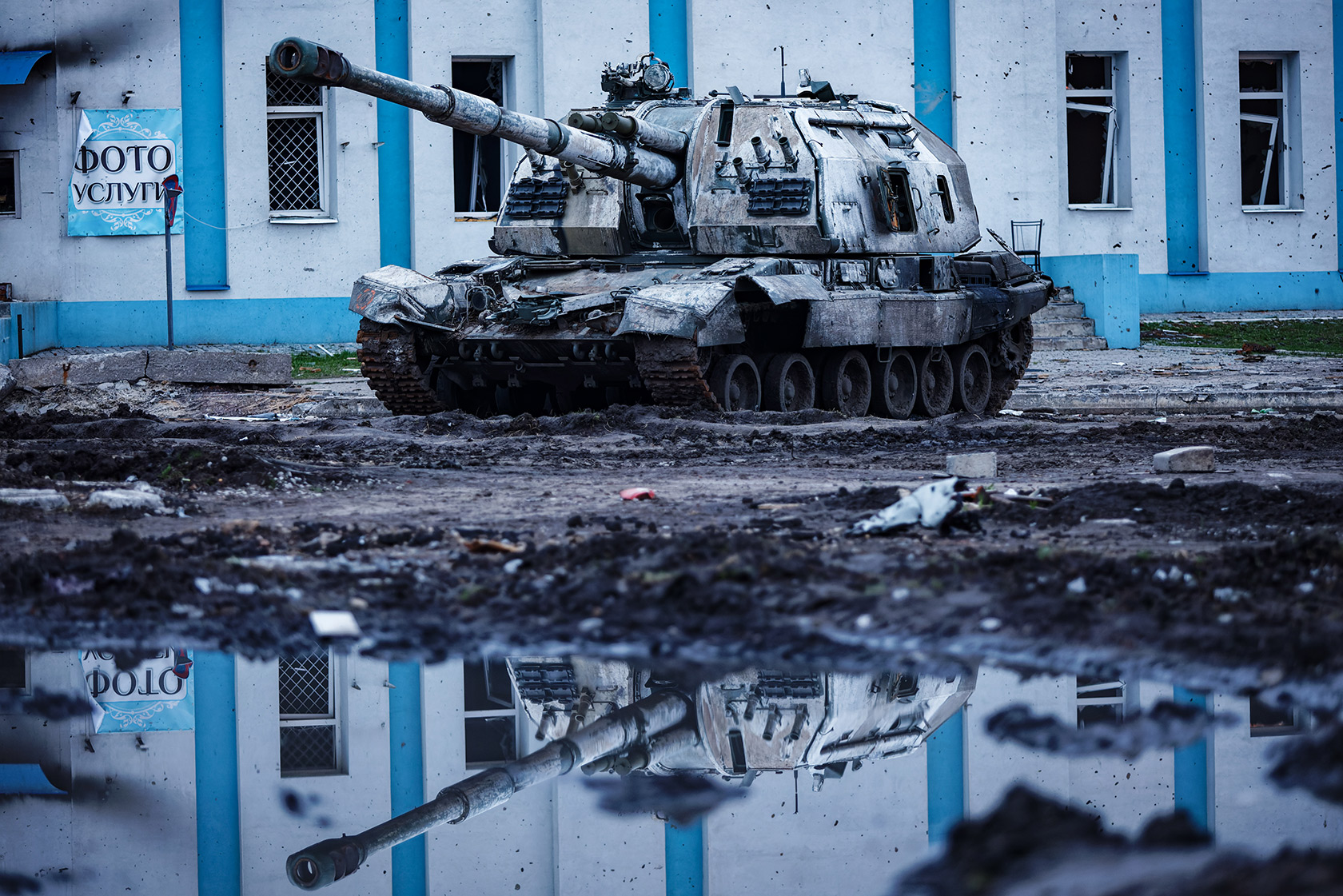
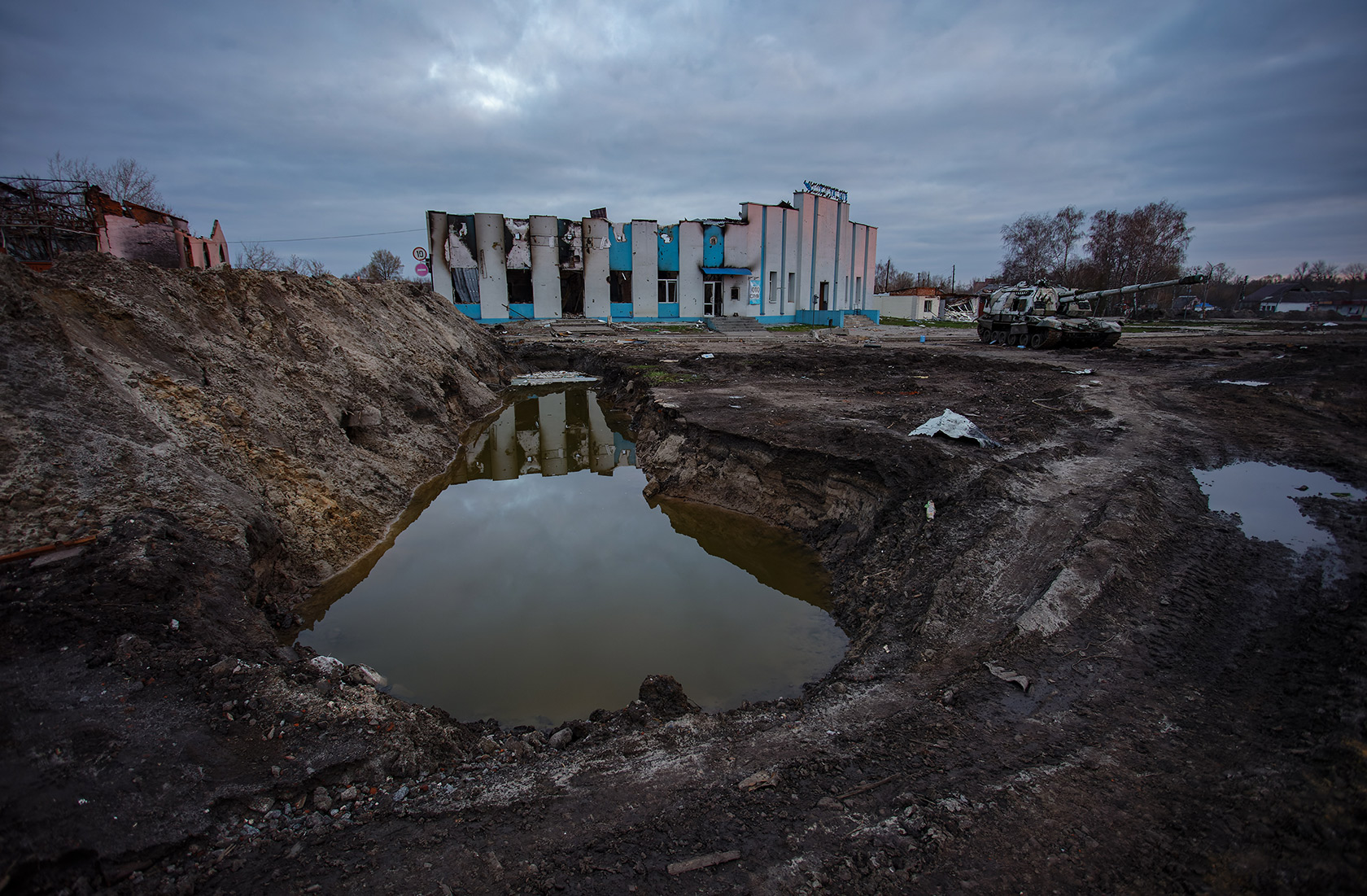
In the middle of the private sector on the outskirts of the city, which was perhaps the most affected by the Russian invasion, stands a destroyed tank marked V, on which someone has taped an A4 sheet with the announcement: “Material evidence. Do not transport.”
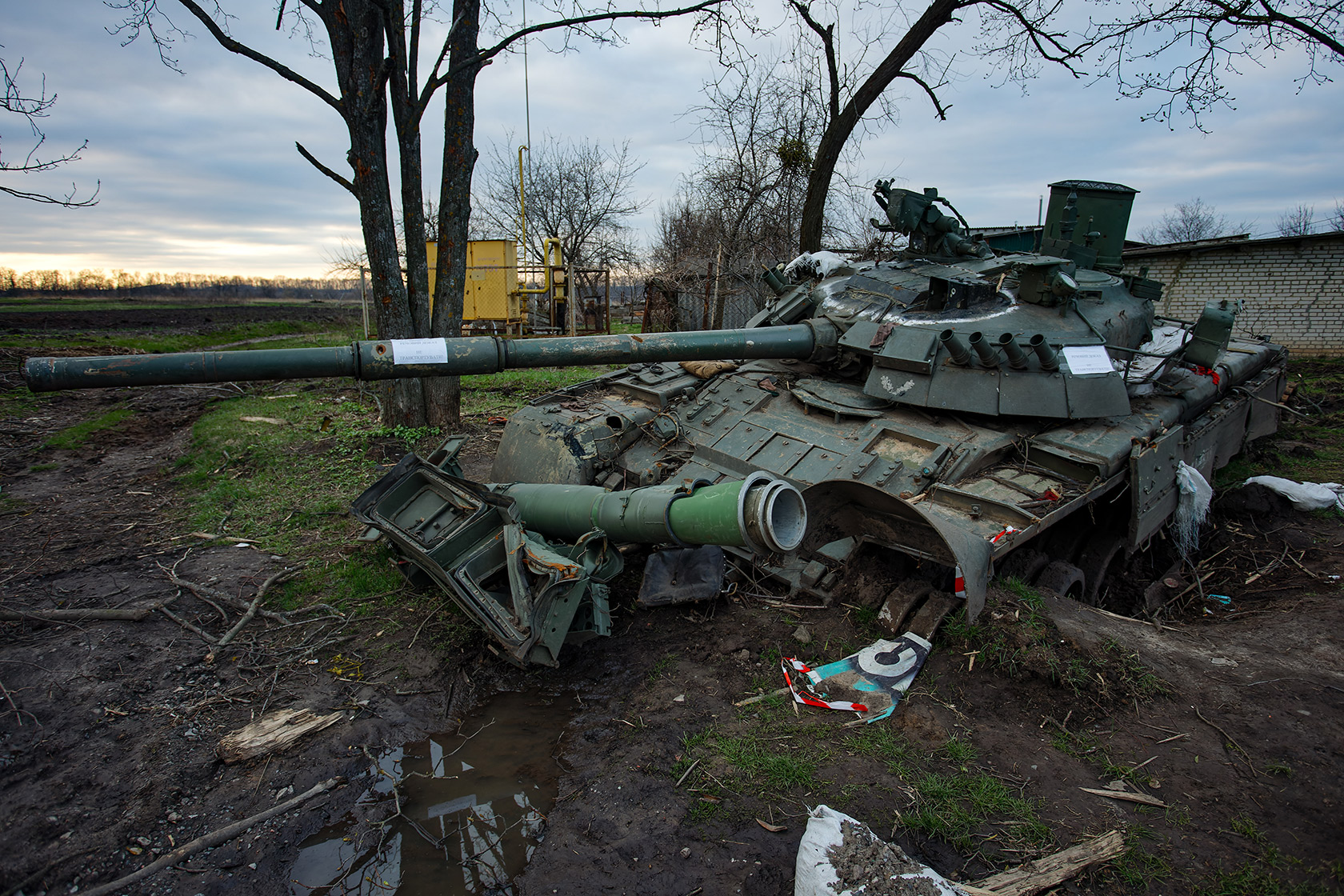
Bova offers to inspect the tank in person.
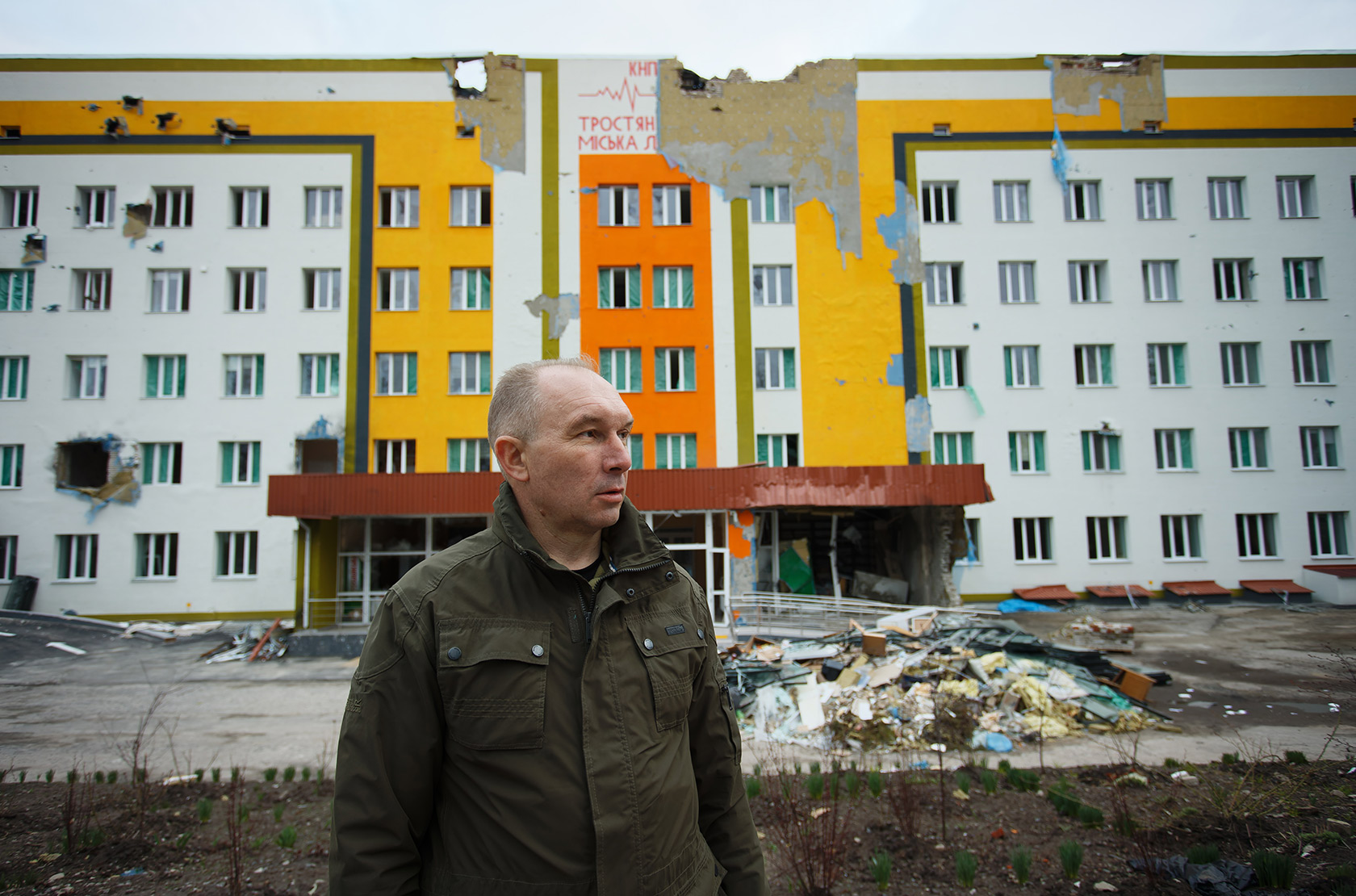
“They were shelling our new hospital, which we had just recently opened, before we even had time to pay off all the loans. There were staff and patients in the hospital at the time.
“In this tank, after liberation, we found a personnel record sheet. These guys, 20-22 years old each, committed this serious crime,” Bova makes an effort to decipher the incomprehensible handwriting and the names of the Russian soldiers listed in the document.
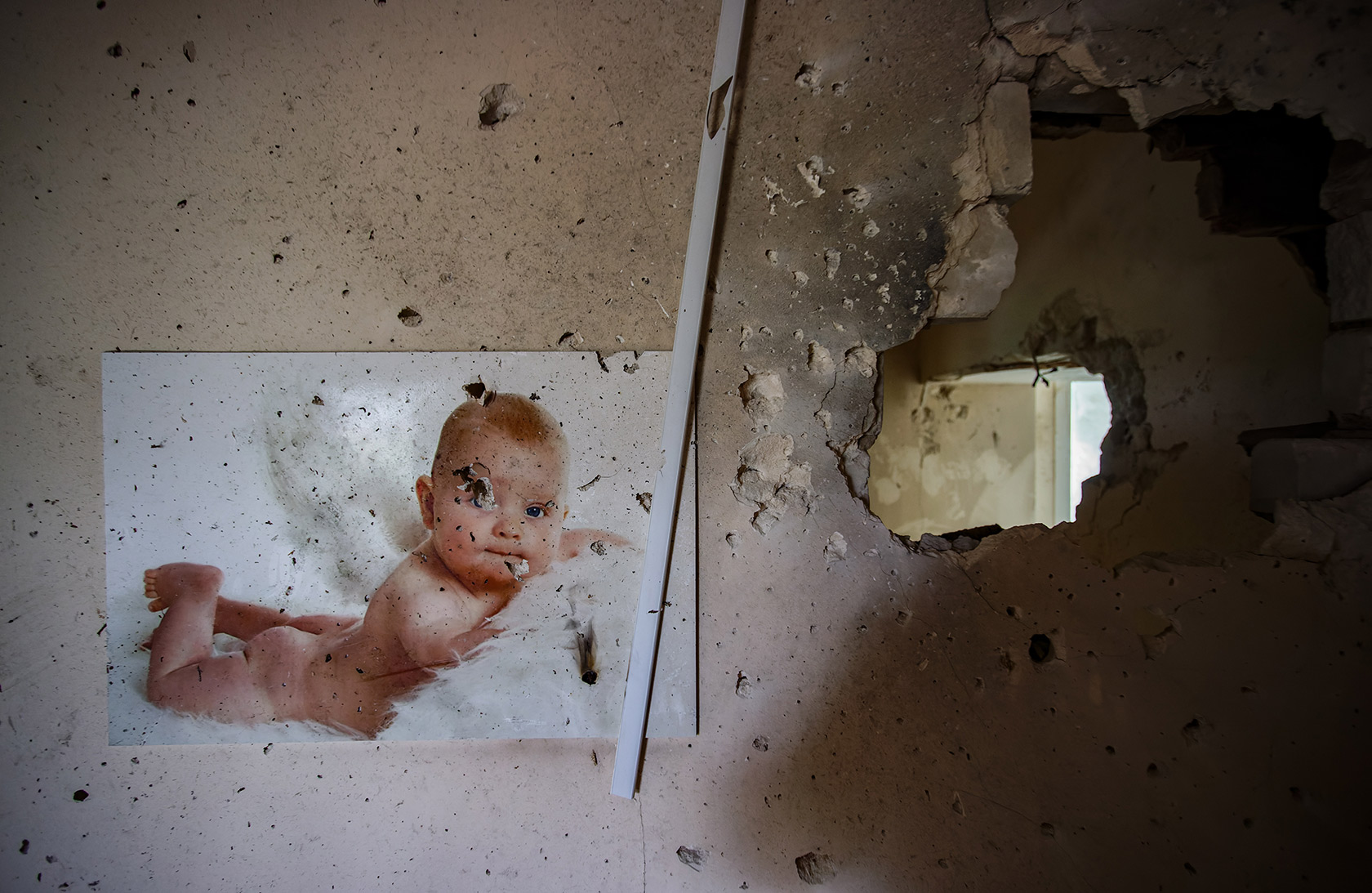
Suddenly, a resident from the house next door tries to intervene in our conversation. She feels uncomfortable interrupting us, but in a trembling voice she addresses the mayor.
– You know, my son-in-law was killed here. A shell tore him in two. All his intestines were on top. One leg was there, the other was there. And now they are forcing us to dig him out of the hole, – the woman says, breaking into tears. – He lay in this garage for seven days. We made the coffin ourselves, buried him next to my mother. The coffin is so solid – my son-in-law weighed 130 kilograms, big. And now we have to dig him out. How can we dig him out? It’s two meters deep, there’s clay there. And we don’t have the money for it. They said only you can help…
– Can you find the strength and not be so nervous? Panic won’t help. I beg you, – Bova tries to calm the desperate woman. – You understand, Ukraine is conducting a criminal case. The investigators need to record all these things. Everyone who was killed during the Russian occupation needs to be examined. The Russians must be held accountable for these crimes. Do you want them to be held accountable for these crimes? Or don’t you? Do you want help for the death of your loved one or don’t you?
– I don’t want any help anymore. Just let him lie in the ground and that’s it! – the woman bursts into tears again.
– Don’t you really want to avenge the death of your loved one? In a legal way? So that the Russians will be held responsible for their actions? – Bova again tries to find rational arguments.
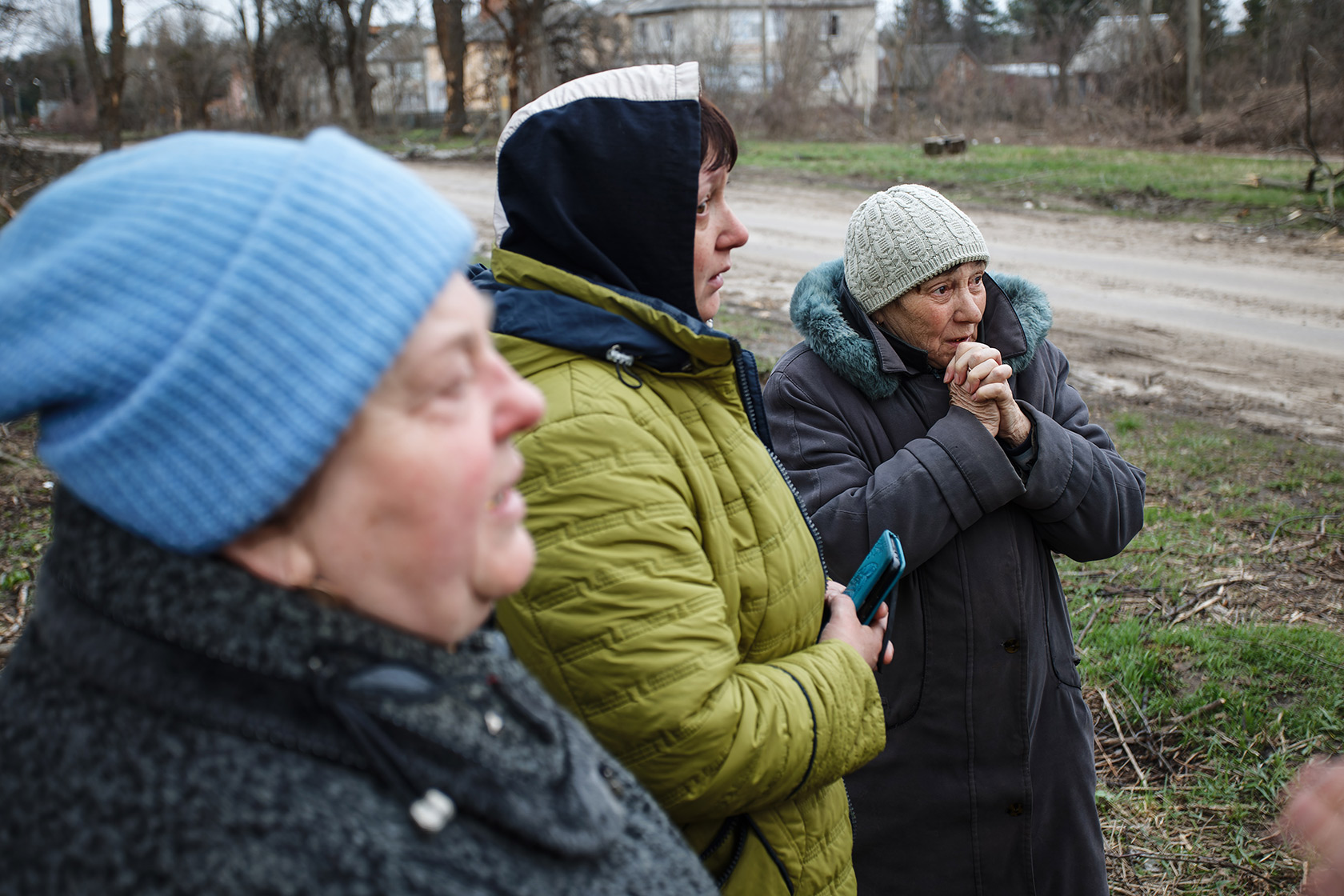
– What, I want it! You can give me a knife, I’ll cut their ***! – suddenly breaks out this fragile, grief-stricken and frightened resident of Trostyanets.
The mayor leaves her his phone number and promises to help with the exhumation, which the state is to conduct as part of an official investigation…
During the Russian occupation of the city, according to preliminary data, more than 50 residents of the city were killed.
“There are many missing people with whom there has been no contact for over a month. Maybe people have left, or maybe we can’t find them yet,” says Bova.
Two weeks after his release, Trostyanets is gradually returning to life.
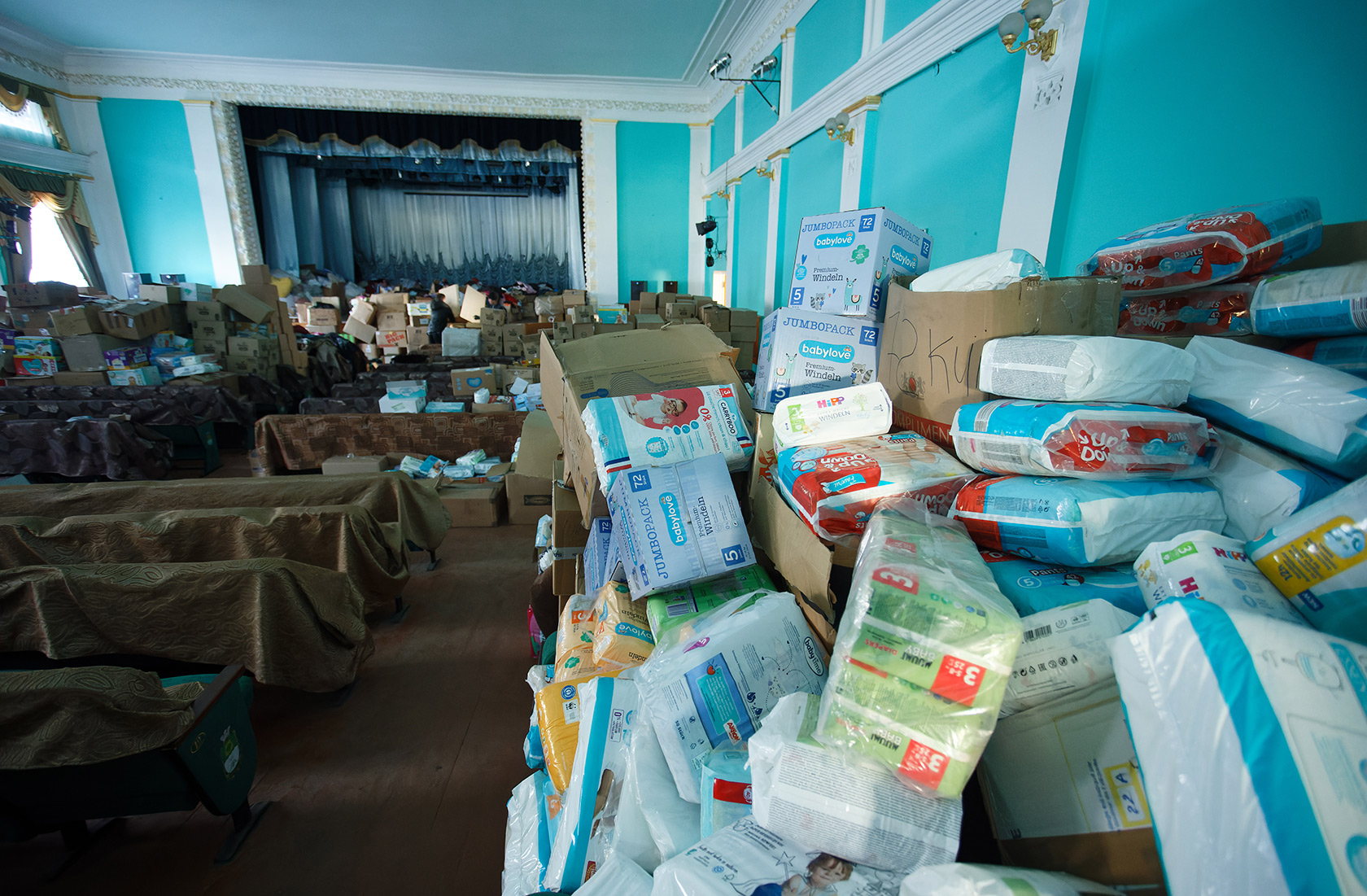
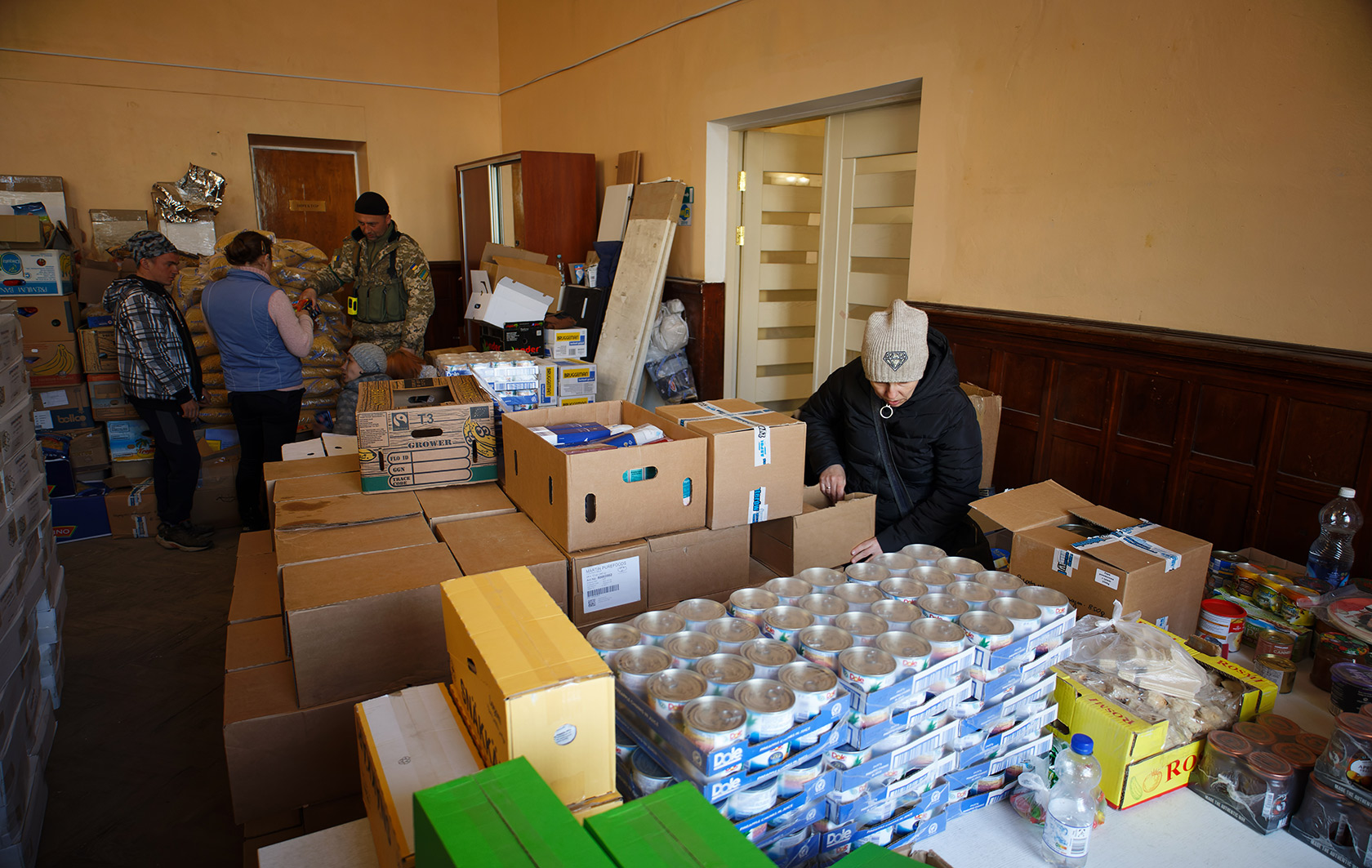
The local cultural center has been converted into a humanitarian headquarters. Volunteers are working around the clock to unpack trucks with medicine, food, and clothing. The hospital, which was perhaps the most affected by the shelling, is also now accepting patients.
But in Trostianets, everyone is fearful about the possible return of the occupation troops.
The day we visited the city, the Russians again shelled several settlements in the Sumy region, 10 kilometers from the border. The mayor and the local defense department even convened an emergency meeting because of this.
But today, according to Bova, occupying the city will be much more difficult. In Trostyantse, there is a terra-defense system, weapons, and bitter experience that should help if the Russians decide to attack again.
Next is a direct speech by the city mayor about the 30 days that the 20,000-strong Trostyanets population spent under Russian occupation.
Offensive
Trostyanets was one of the first to meet the Russian invasion.
It all started at 4:30 a.m. when I got a call and was told that our border guards were already being shelled at the border. We quickly gathered here at the city council, started bringing in sandbags, looked for weapons, and found only three rifles. We literally had no time.
When we were told that a column of about 100 pieces of equipment was entering the city, we realized that we definitely wouldn’t be able to stop them with three rifles.
And there was a choice – either we would all be shot here in the city council, or we would have to urgently look for weapons in neighboring cities. So in the morning, several people went to neighboring Okhtyrka and Lebedyn.
At 9 am, Russian tanks were already in the center of Trostyanets.
Why Trostyanets? It was completely unprotected by anyone, there were no military units here. Let’s say in Okhtyrka, there were about 2 thousand soldiers there, there was something to defend themselves with, and weapons. But there is no one here.
Therefore, the Russians entered the center and settled in the city council building.
People were already sitting in basements at that time, they came to them and asked them to quickly move into apartments. And near their house they set up “Pinocchio” and other artillery installations, that is, they covered themselves with people as a human shield, because our soldiers definitely wouldn’t bother with residential buildings.
During the occupation, about 150 pieces of equipment were based in the city: tanks, armored personnel carriers, various other vehicles. There were also about 500 personnel at different times and three rotations.
First, scouts came to Trostyanets, then three days later the army and even a general came here. They sat on the second floor of the city council and arranged a rest there, bringing beds from a neighboring hotel.
Also, throughout this entire occupation, artillery was stationed separately at the station. As far as we later understood, there was not even any coordination between them.
And with the third wave, the DPR arrived.
They have already started to terrorize the population and said that we will remember “all 8 years of Donbass.” But mainly columns of equipment passed through the city, on some days – up to 5 columns, that is, they used our city as a base.
Life under occupation
The Russians were looking for me from day one. They broke down the door of my house, took down my portrait from the board in the city council, and then tried to find me at all the checkpoints. So I was forced to leave for neighboring villages.
During this month, I changed about a dozen different places to stay overnight. They were private houses, some apartments.
There were times when we had to leave, we were with the team in the Poltava region, working with the Security Service and other units to provide the most clear, accurate information possible.
I also managed to get to Trostyanets twice while it was under occupation. Once, we were even publicly here, on this square near the city council, because it was their shift change at that time. We arrived, talked to our people, set tasks, and left again.
When they told me that they were actively searching for you and that if they didn’t find you, they would search for your family, I called my wife. And we took her and the children through our villages, through various forest paths.
The Russians did not have any clear tactics towards the locals. On the second or third day, they killed the head of the street committee, Anna Samoilova.
She was just walking down the street and was shot by a Russian sniper who was sitting at the train station. She lay on the street for, I think, 4 or 5 days, and no neighbors were even allowed to come near her to pick up her body.
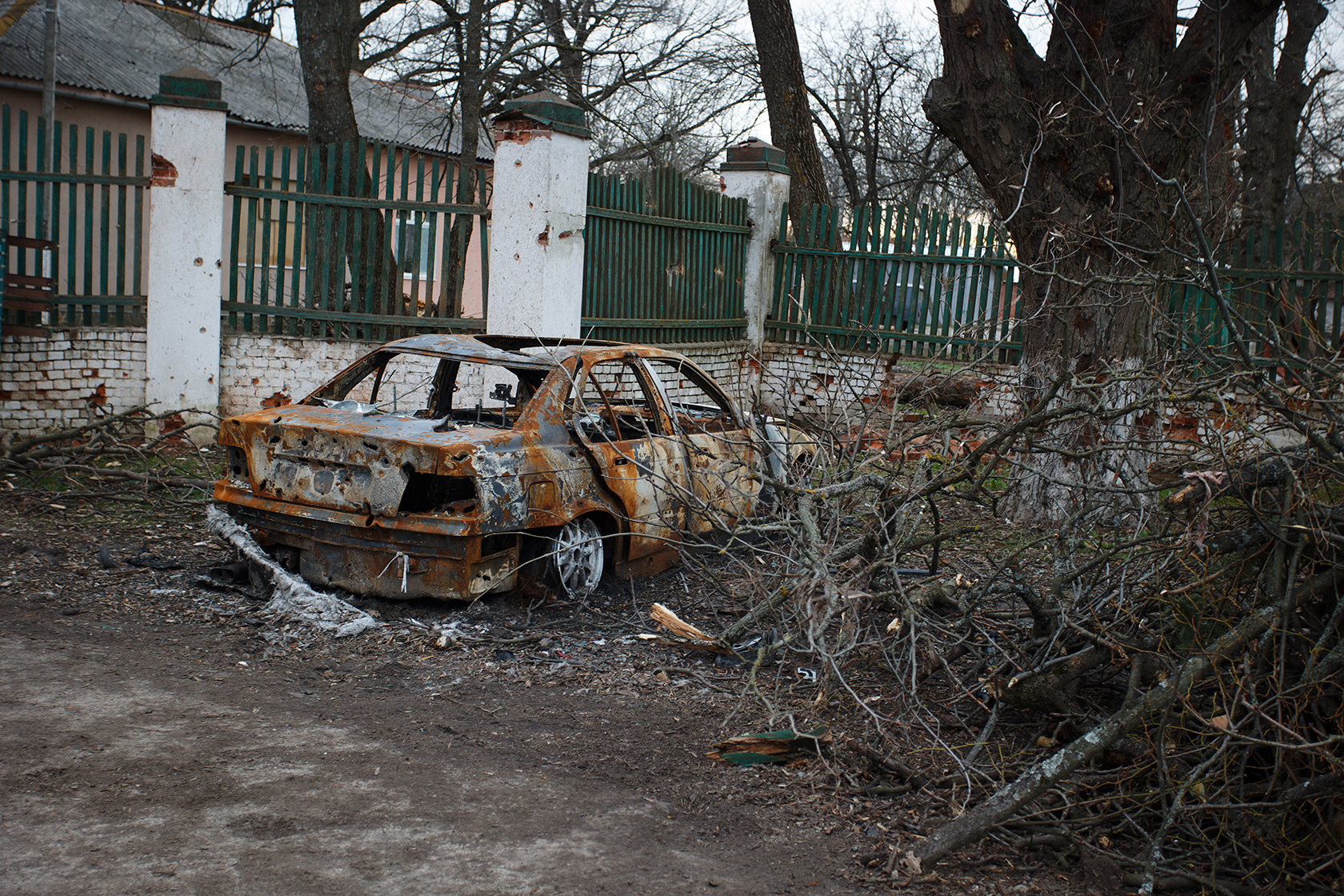
We had cases when Russians threw grenades at passersby. There were cases when a person left the yard and disappeared, and to this day we can’t find her. She was just doing something in the yard, left the yard, and we still don’t know where she is.
Here in this garage, near the city council, on the first day of the city’s liberation, we found the body of a resident of the village of Boromlya, who had been tortured and thrown into a pit. In neighboring Bilki, we found two boys: one shot in the ear, the other in the back of the head. And there were many such cases of torture and everything else.
But some were able to walk normally. Some even managed to film with their phones and now they say that they did not cooperate with the Russians. The Security Service of Ukraine is dealing with this issue.
They also didn’t allow people to be buried in the cemetery. The Russians came to the funeral service and at first wanted to steal their cars, but then they didn’t succeed. So they just shot them, leaving the city without the ability to take people to the cemetery.
Then they set up tanks and their checkpoint at the cemetery. And they didn’t let anyone into the cemetery . That is, it was very dangerous to bury at that time. Some people buried their relatives in the yards of their houses. In our yards, there are still crosses and people who haven’t been reburied.
When we were organizing humanitarian corridors, the Russians took all these people’s phones in a bag, doused them with gasoline, and set them on fire, taking some for themselves.
People left without phones. And some can’t get in touch to this day, having no contacts, no data, no recorded phone numbers of their relatives.
When there was a third humanitarian corridor, and we were taking 200 people out on buses, they turned it around and wouldn’t let them out of the city. And then these buses spent three nights waiting for the next green corridor.
Today, many people are still being searched for. They are looking for our activists, they are looking for military enlistment office employees.
ATO participant Roman Tutov was taken from his home, we suspect that on a tip from one of the local collaborators, and we still cannot find him. He may have been captured, or he may have already died.
To this day, I don’t know where our head of the ATO organization, Serhiy Samoilenko, is. He lived here, right in the city center. Was he taken prisoner or did he leave – there is absolutely no information about him.
The Russians came to all the foresters who had weapons. They knew the lists of these foresters. One of them said that when they came to his house, he said that he did not have any weapons. And he heard a voice in the car: “He has weapons, search better!” That is, someone was sitting in the back seat of the car and, apparently, was driving and showing activists. Now our special services are actively dealing with this issue.
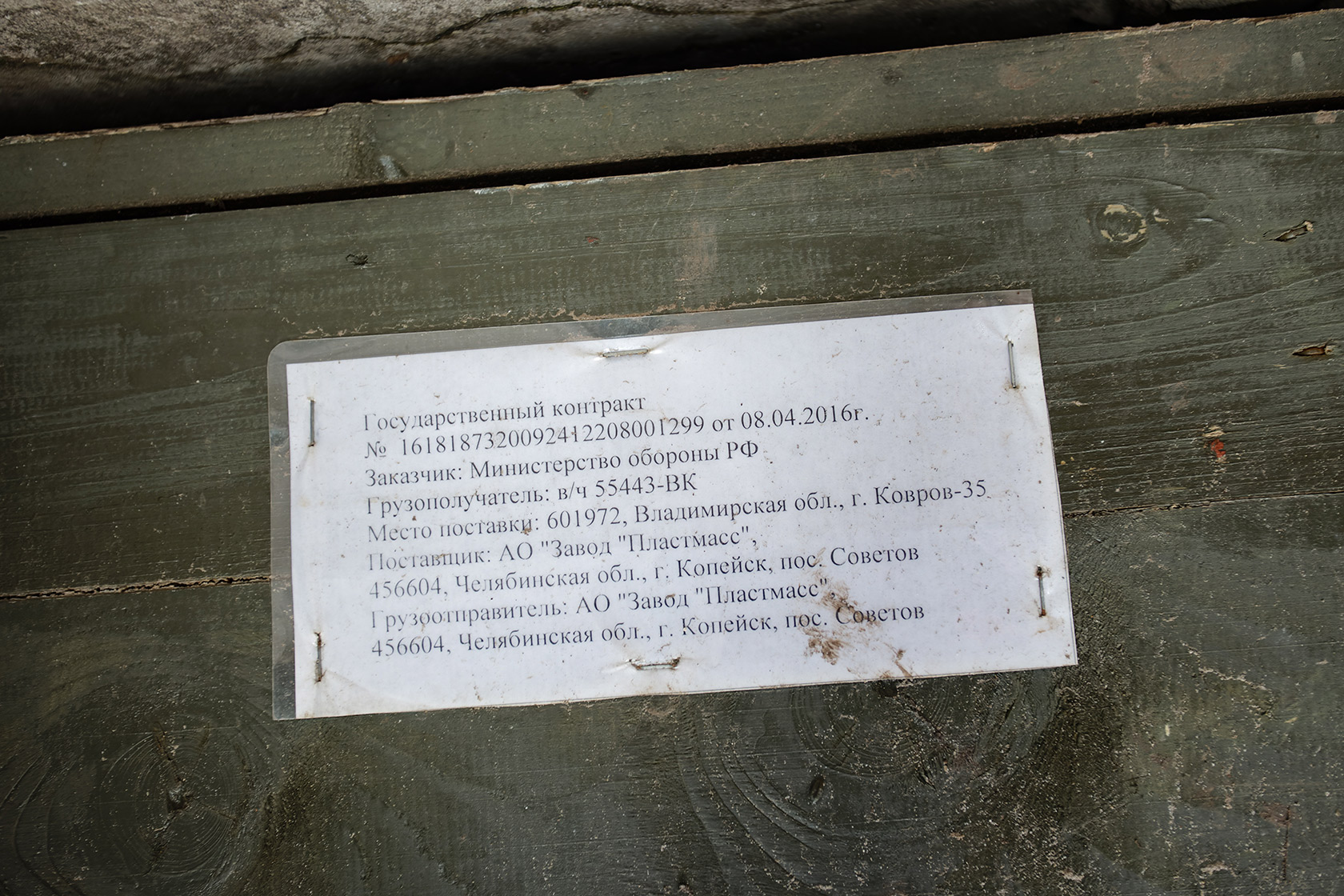
In the very first days, the occupiers robbed our ATMs. They stood on the street, smiled, and let people in: “Go ahead, rob more.” Our people, unfortunately, robbed these commercial facilities.
But now the servers have been found on ATB, they survived, and there are photos of everyone who was involved in the looting, including local residents.

The day before yesterday, I literally appealed to the head of the regional police department to have a criminal case opened against each person, and each person was punished according to the laws of Ukraine for looting during the war.
Throughout the occupation, it was necessary to supply the city with food in order to avoid a humanitarian catastrophe. We understood that soon there would be no food supplies, because the Russians had set up checkpoints at the entrances to the city, on absolutely all roads. Only one road was not closed by them, and for a long time we used that field road, taking advantage of the fact that the volunteers had bought us an SUV, to bring in food supplies.
We also gave the order to our school directors, and everything that was in the school supplies (oil, cereals, meat, fish) was distributed to people who lived near the schools. Volunteers in the city baked and delivered bread. We asked the Eldorado enterprise to give us flour, the chocolate factory also gave oil and flour, and we quietly delivered all this. We tried not to let the Russians find out where it came from.
Thank God, no one has died of hunger here.
Release
Of the 20,000 people living in the city, 12,000 remained by the end of March, and I myself asked everyone to leave if possible.
When our 93rd brigade was already approaching the city , we communicated with various units, and they said: “Yuriy Anatolyevich, if possible, tell everyone to leave at any cost, because if the fighting for the city is intense now, a lot of the local population could die in the fighting.”
The outskirts of the city suffered the most from the fighting. For 3-4 days, there was the heaviest shelling, when people were forced to sit in basements without leaving.
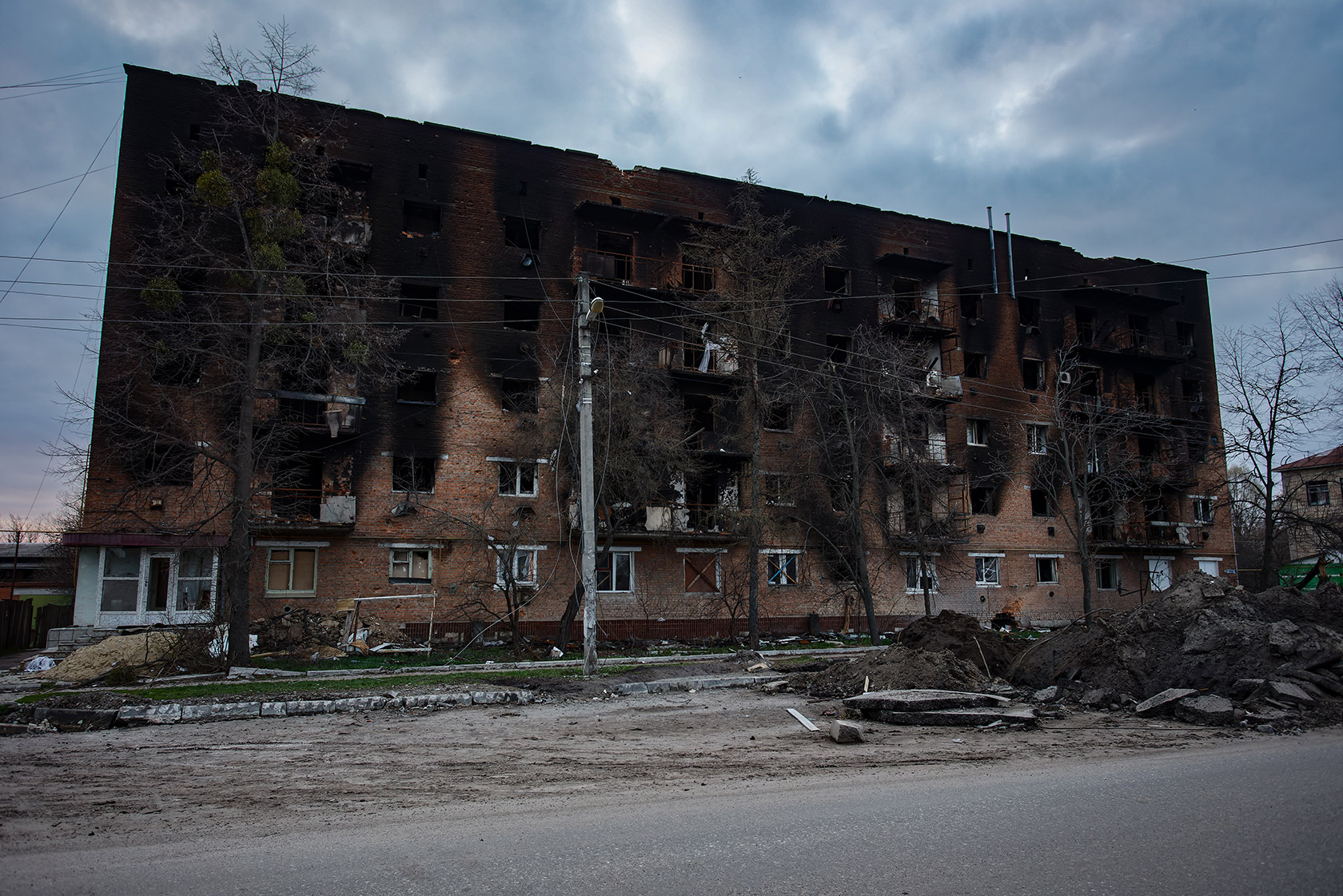
And the Russians, realizing that they were almost surrounded by our units from different sides, decided to leave Trostyanets.
They literally removed all their posts and checkpoints in two hours, and 130 pieces of equipment left Trostianets. And then a column followed, various trucks, civilian cars. The last one left on a scooter, some LNR member.
They fled towards Boromly, then from Boromly to Zhigaylivka, and headed towards Russia. After 4 hours, they crossed the border with the Russian Federation.
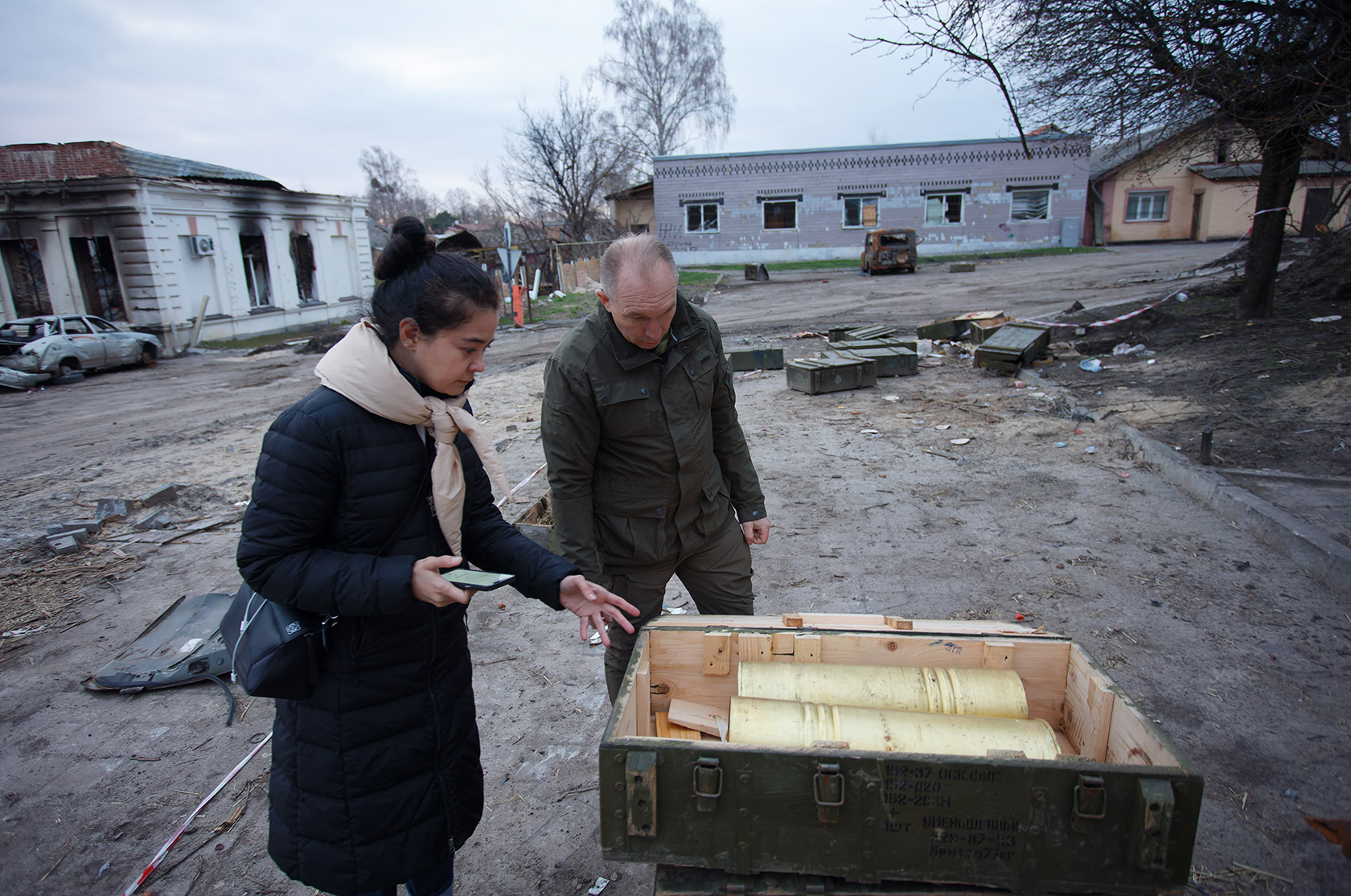
There was no one in the city around 9-10 pm on March 26. And our military reported this. And in the morning, at noon, our 93rd brigade entered Trostyanets.
People are slowly returning to Trostyanets. The city center was not badly damaged, we are restoring heat and light. The other day, volunteers helped us install windows on the first floor of the bombed-out hospital, and patients are already being admitted there.
Damages? It’s hard to even begin to count. It’s tens of millions of dollars. Imagine that we spent 200 thousand hryvnias just to replace a few windows, and that’s only 1% of what needs to be done.
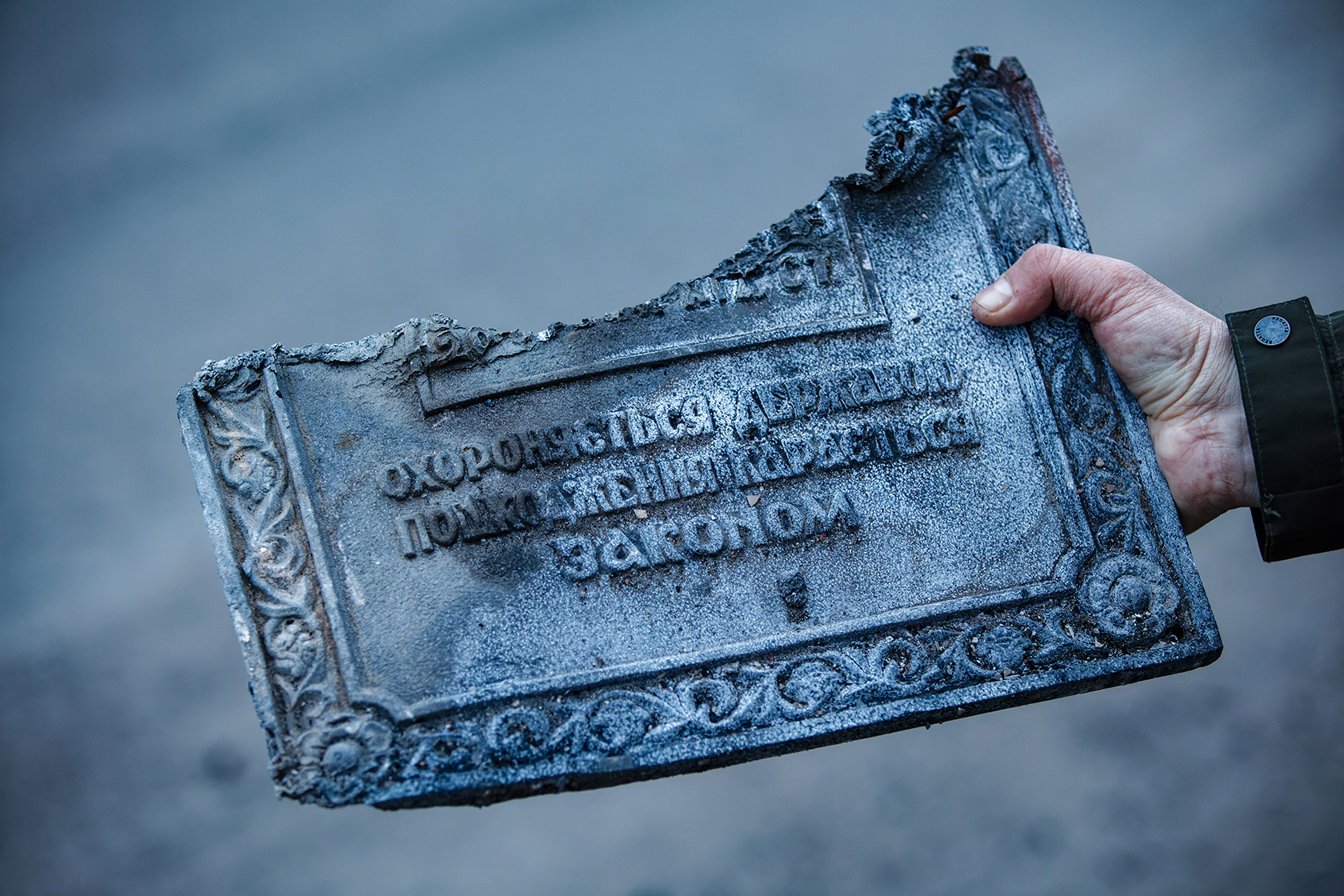
We were a modern city, modernized, implementing energy-efficient technologies, and building.
Now all this has to be started from scratch.
At one of the factories that the Russians bombed, they left behind a sign: “Sorry, we made a little mess here, but the Americans will help you clean up.” That’s what they had in mind.
But we will clean it ourselves. And we are already doing it.
Sevgil Musayeva, Ukrainian Pravda