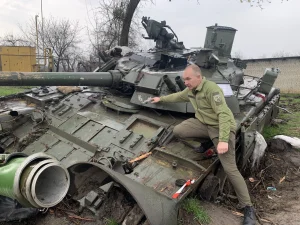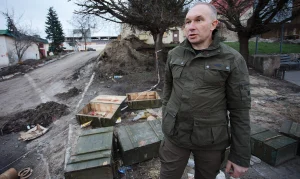
The small town of Trostyanets survived 31 days of Russian occupation. “My task now is to show the horrors of this war,” says its mayor.
By Taras Kaidan, Feargus O’Sullivan and Mariana Matveichuk
April 12, 2022 at 7:09 PM GMT+3
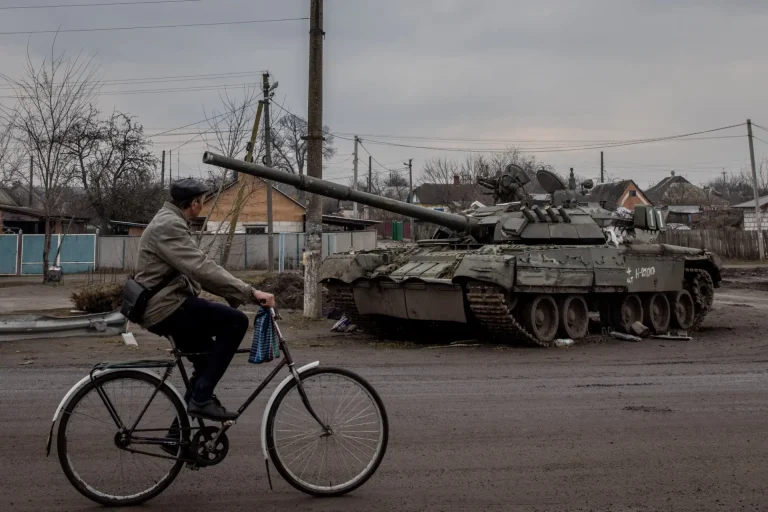
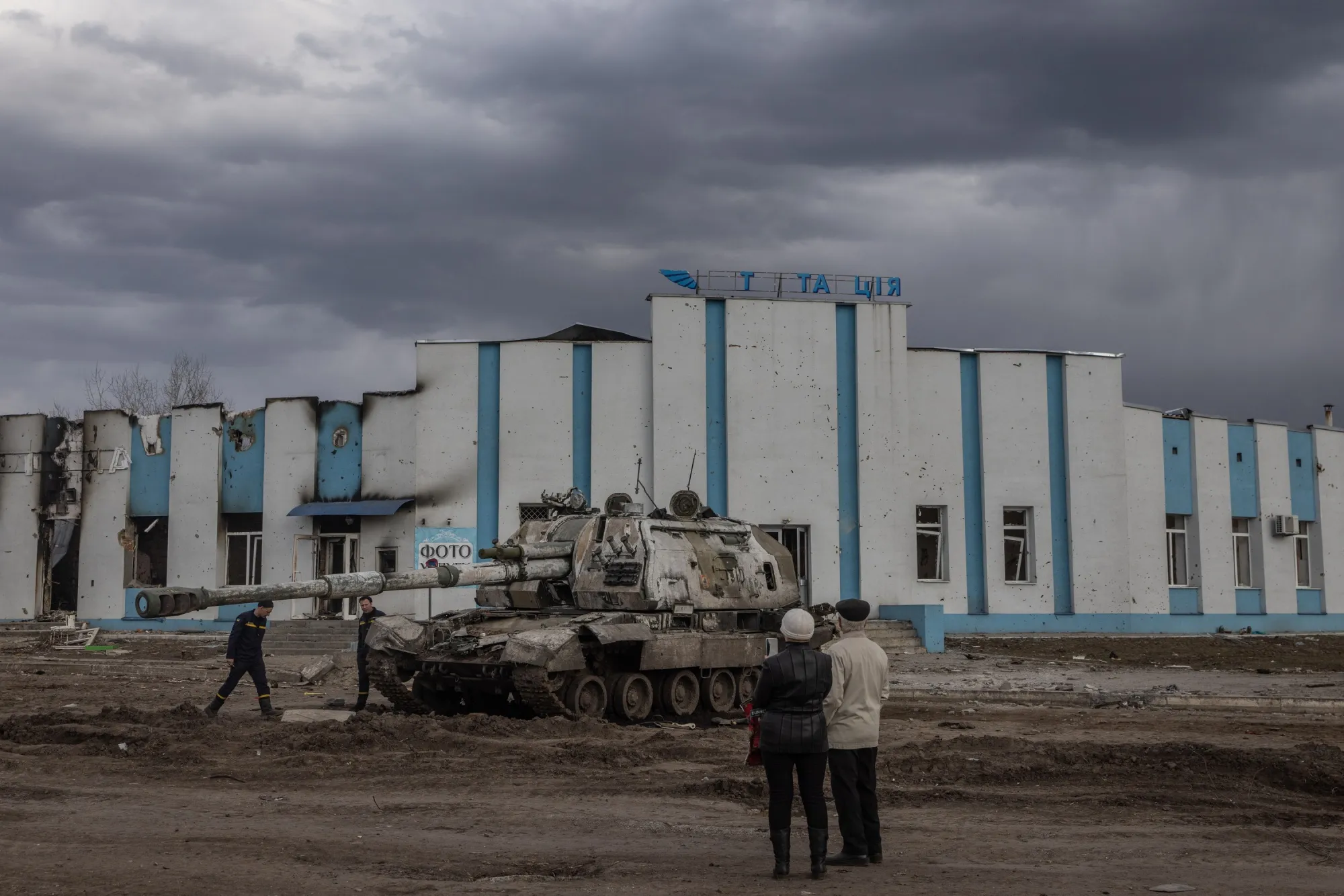
Before Russian tanks crashed into Trostyanets in the first days of their invasion, the small northeastern Ukrainian town 20 miles from the Russia-Ukraine border was known mostly for its cluster of historic monuments, its chocolate factory and the innovative development strategies of its progressive mayor, Yuri Bova. Now the town is scarcely recognizable: Buildings have been shelled and looted, roads are mined, and the surviving population — 20,000 residents lived here before the war began — is reeling from 31 days of Russian occupation.
After the initial Russian advance into Ukraine stalled, Trostyanets became a staging area for hundreds of troops and their equipment. The number of civilians killed during the occupation is still unclear. Targeted by Russian authorities, Bova and other city leaders took shelter in a nearby village. Now that the Russians have departed and the theater of the war in Ukraine has shifted to the southeast, the mayor is taking on the task of helping the town back onto its feet. With most infrastructure damaged or destroyed and residents still traumatized and lacking services, that’s a mammoth undertaking. Bloomberg CityLab talked to Mayor Bova about life during the occupation, and what the recovery and rebuilding process could look like; the conversation has been edited and condensed.
On the first day, I was told by phone that Russian soldiers had broken into my house, drove a tank into the yard, knocked out the door and smashed the whole house. When I got there and my wife saw a photo of our home, she started crying. Everything was turned upside down, shot, destroyed. They smashed office equipment and TVs and tore up pictures.
Since then, a significant part of my life has disappeared, and a new countdown has begun. Life is now divided into two periods: before and after the war. Before the Russian invasion, our main task was to develop innovations and solutions for community advancement. Now the key question is our city’s survival.
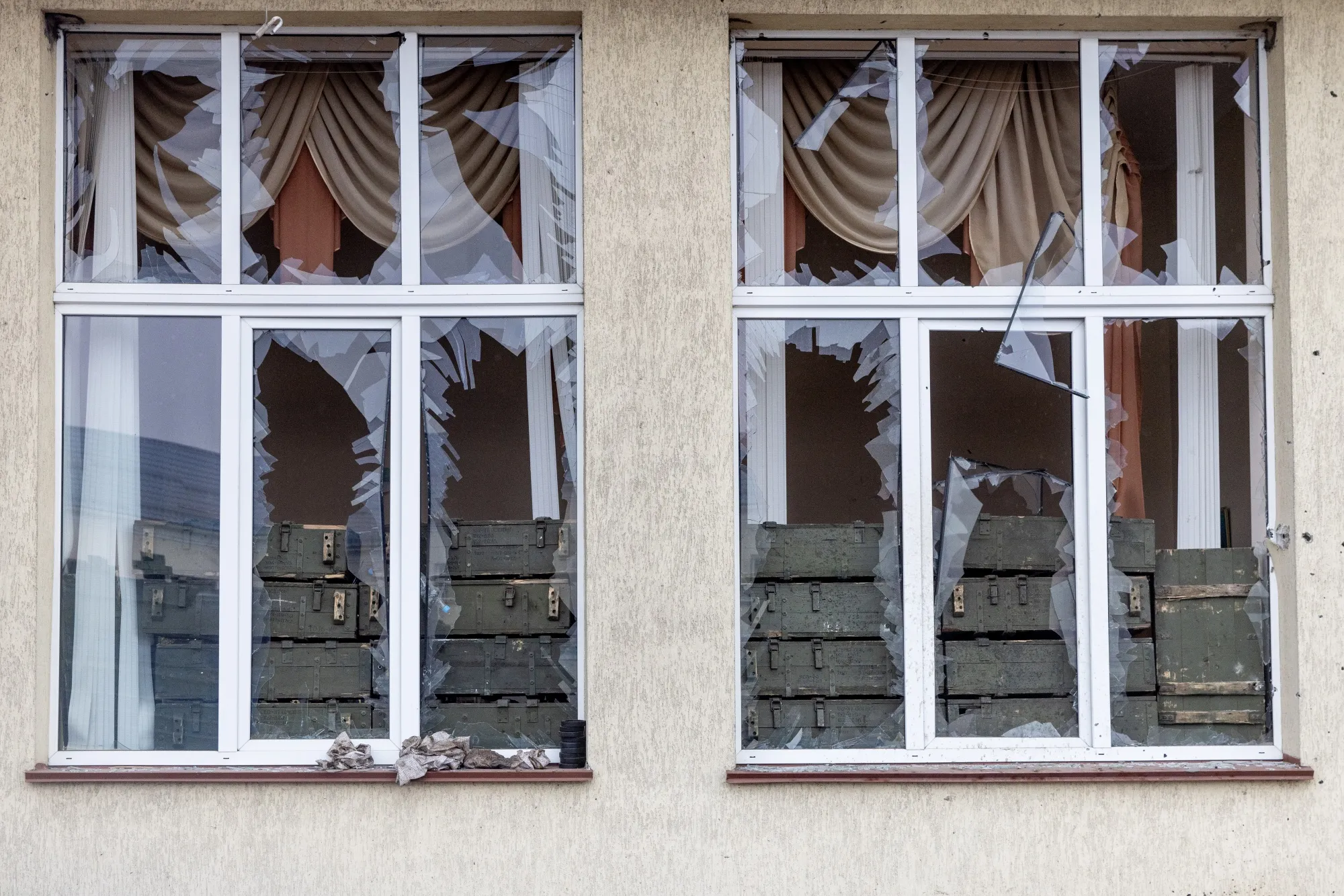
The worst thing about the occupation was the killing of civilians and the destruction of public buildings like hospitals and libraries for no reason. People here have been building things up for centuries, only to see them collapse under Russian shelling and bombardment. We gave our souls to what we did. We invested our resources. When everything instantly collapses, it leaves a devastating impression.
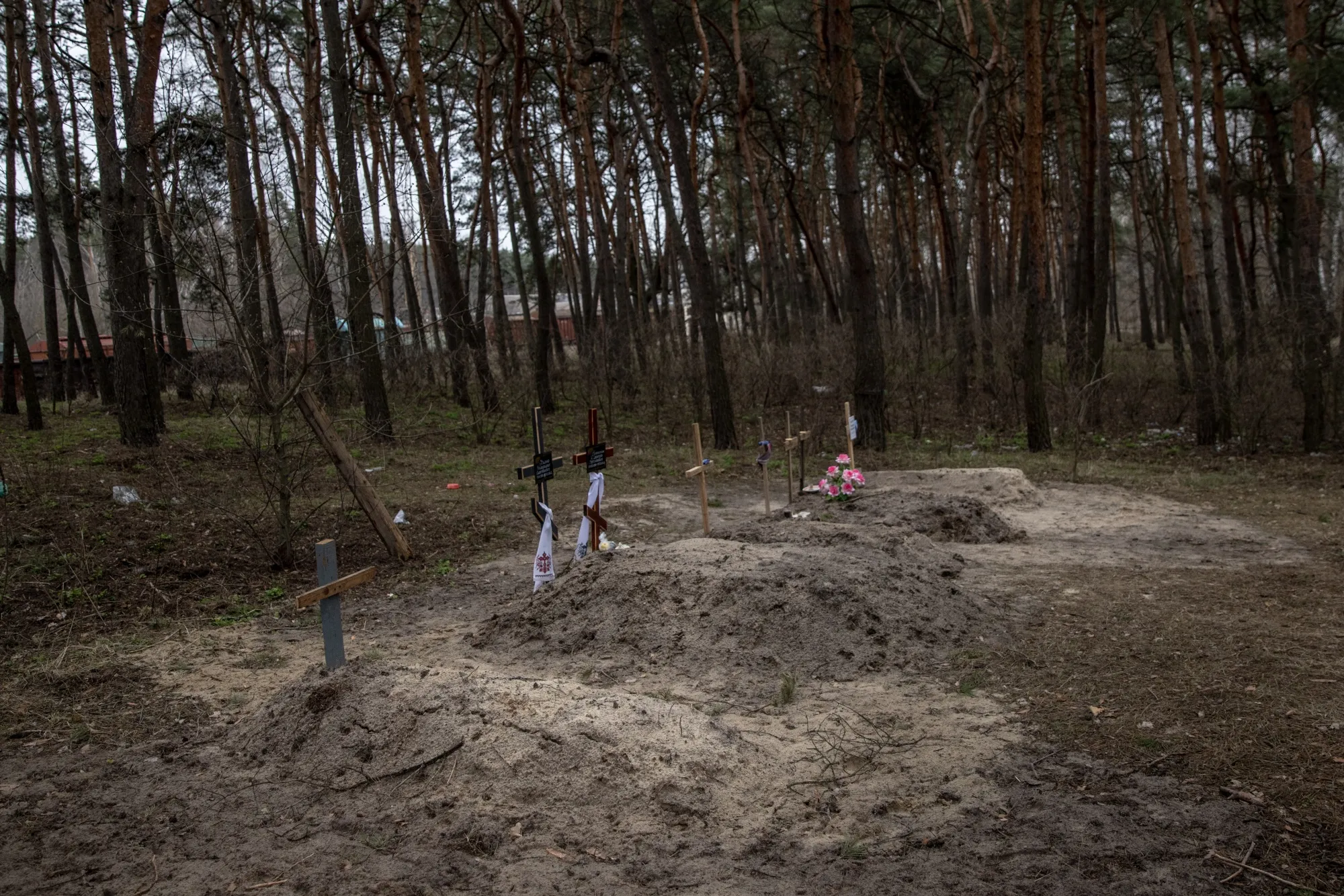
Life during the occupation was unreal. People didn’t go to work, as all the administrative buildings were occupied by 400 to 500 Russian soldiers and about 100 military vehicles. Citizens were afraid to walk, as Russians could shoot them for no reason. They forbade burying people in the cemetery, deliberately placing their tanks there instead. People spent weeks in basements. Some of them witnessed their property being destroyed. They were forced to dig graves for their loved ones in backyards. In many cases, living people had to share their living space with dead relatives and friends for days. Can you imagine children having to live like this next to their deceased parents?
Considering my active pro-Ukrainian stance, working in the city under occupation would have meant a direct threat to my life. I rejected the idea of any cooperation with the enemy. I knew Russians would hunt my head, as well as those of other activists. And that’s precisely what happened: On the second day after entering the city, the occupiers looked for these people. Therefore, I managed the city remotely. At the same time, I did not go far and sometimes succeeded in coming for a brief secret visit.
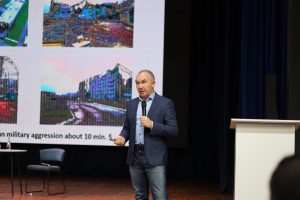
Personally, my entire 17 years of work as a mayor disappeared right before my eyes. It is unbelievable. The city used to set a specific tone in Ukraine for reforms, the promotion of democratic values, ideas and projects. Speaking at international events, I always emphasized how crucial it is to build a stable Ukraine in the east and northeast, to ensure the country’s security. This has become even more relevant now. For one month, people were held hostage. My task now is to show the horrors of this war and what the occupiers were doing here.
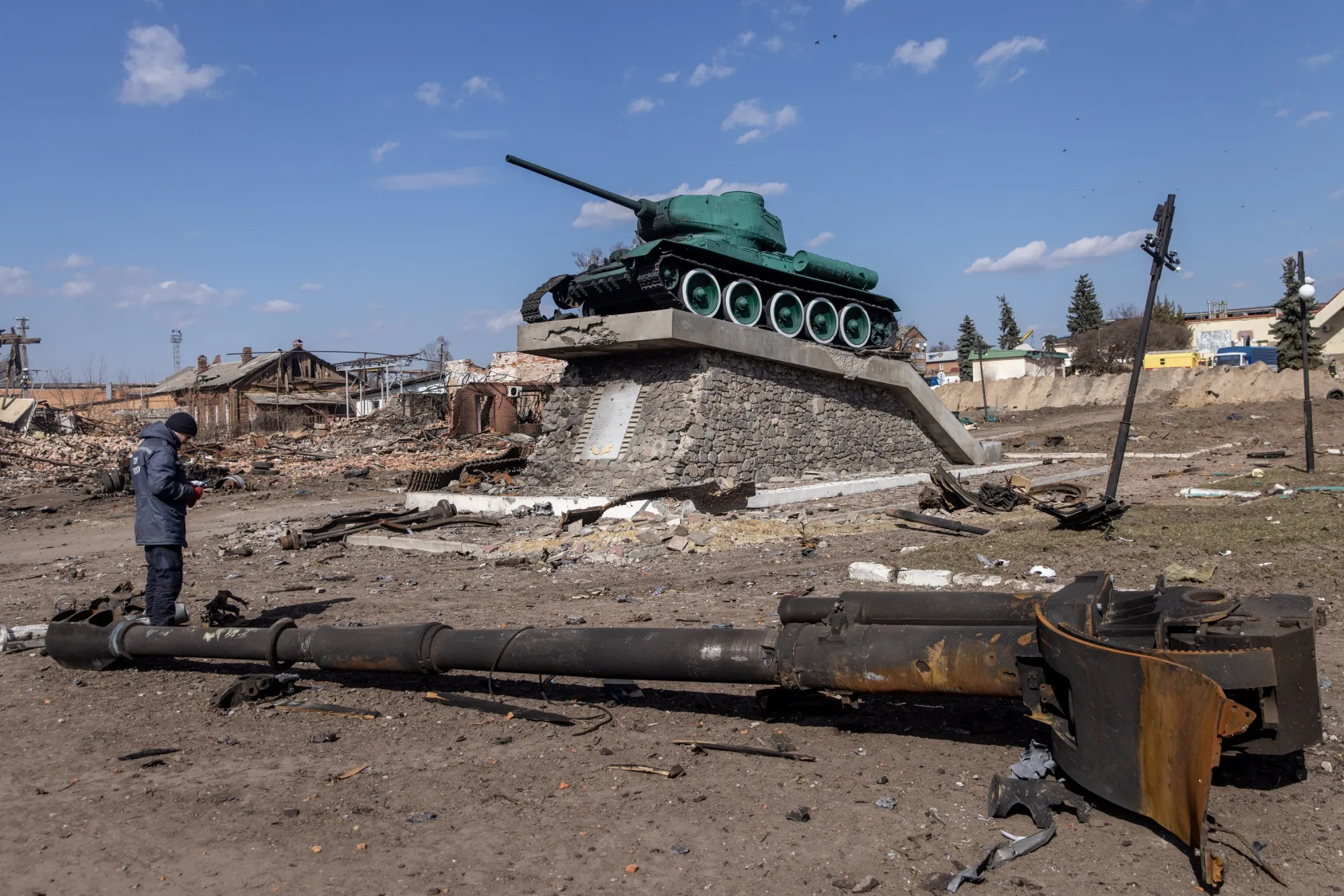
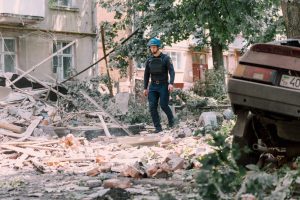
Trostyanets is in ruins. The hospital is out of order. It wasn’t destroyed, but it was shelled by Russian tanks and sustained heavy damage, with broken windows and walls and destroyed equipment. We used to have almost 400 staffers there before the war, but only 20 people are left. We can’t actually provide care with that small a staff, so doctors from other cities have to travel to help us, which firstly isn’t safe enough and secondly doesn’t solve the need for daily service. We believe our staff will feel safe enough to return once we have repaired the windows, restored heating, and provided treatment for the most urgent cases.
Next comes the power grid, which was almost completely destroyed. Since the fourth day of the war, all settlements near Trostyanets were left without electricity and water and cut off from the city. The citizens spent one month in the dark, without heating, almost without food — we had almost no delivery all month as evacuation corridors were not provided. We will need humanitarian aid for at least a month. Today, when people have electricity in their homes, it feels like a feast.
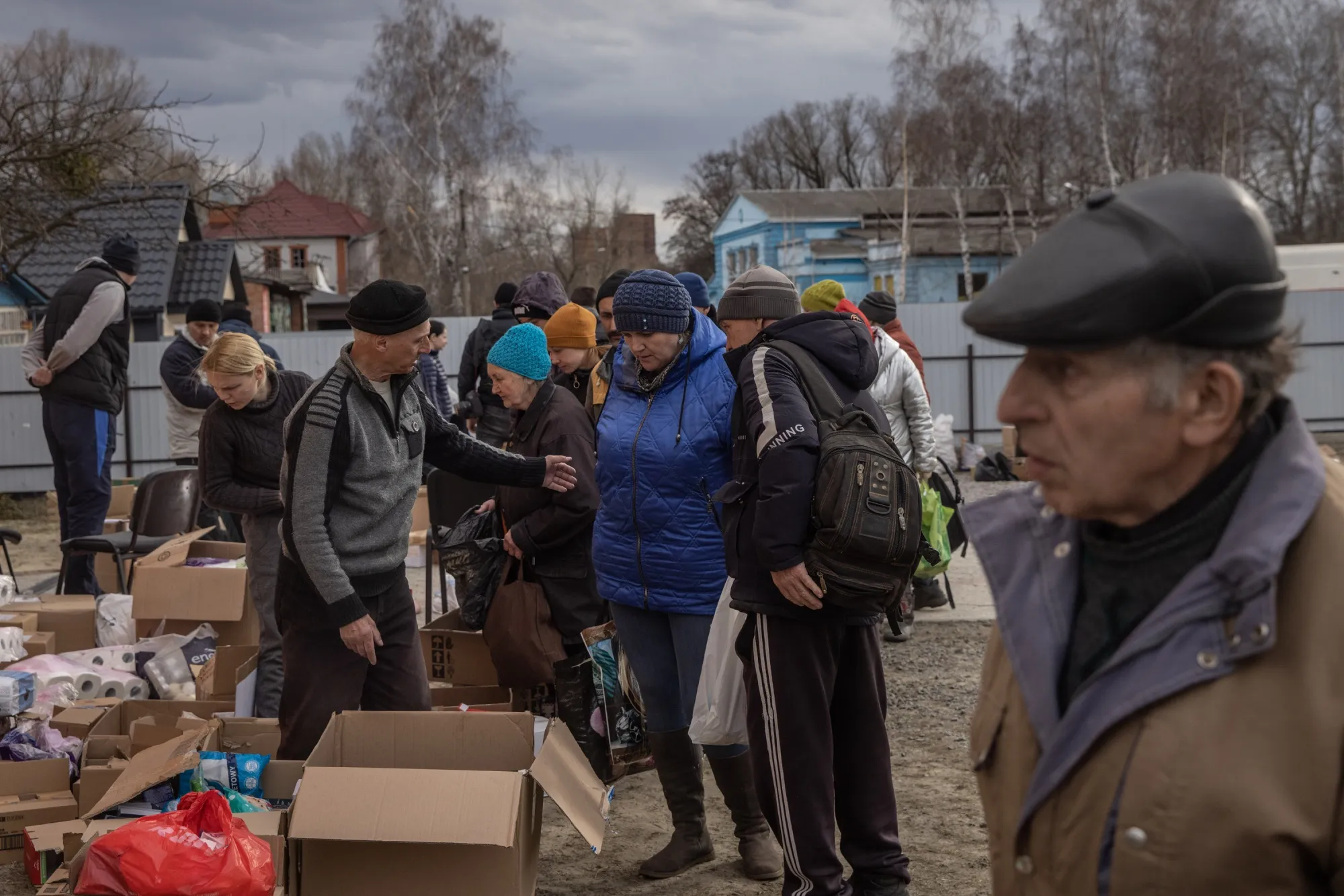
To help with the situation, we receive help from international partners and various places in western and central Ukraine. We also ask everyone we can contact through social networks, by phone, or any other way. We have been able to set up a network of humanitarian centers where groceries and essential goods we receive are distributed to people every day. The most important thing is to deliver aid to people who can’t come to these humanitarian centers on their own.
There is no public transit in Trostyanets itself — all the city buses were destroyed. Because almost everything was stolen or destroyed, we use volunteers and private initiative to deliver necessary aid. We have been able to restore some services; garbage is being collected and the water supply system has started to work, somehow. But it will take a long time to restore full public services.
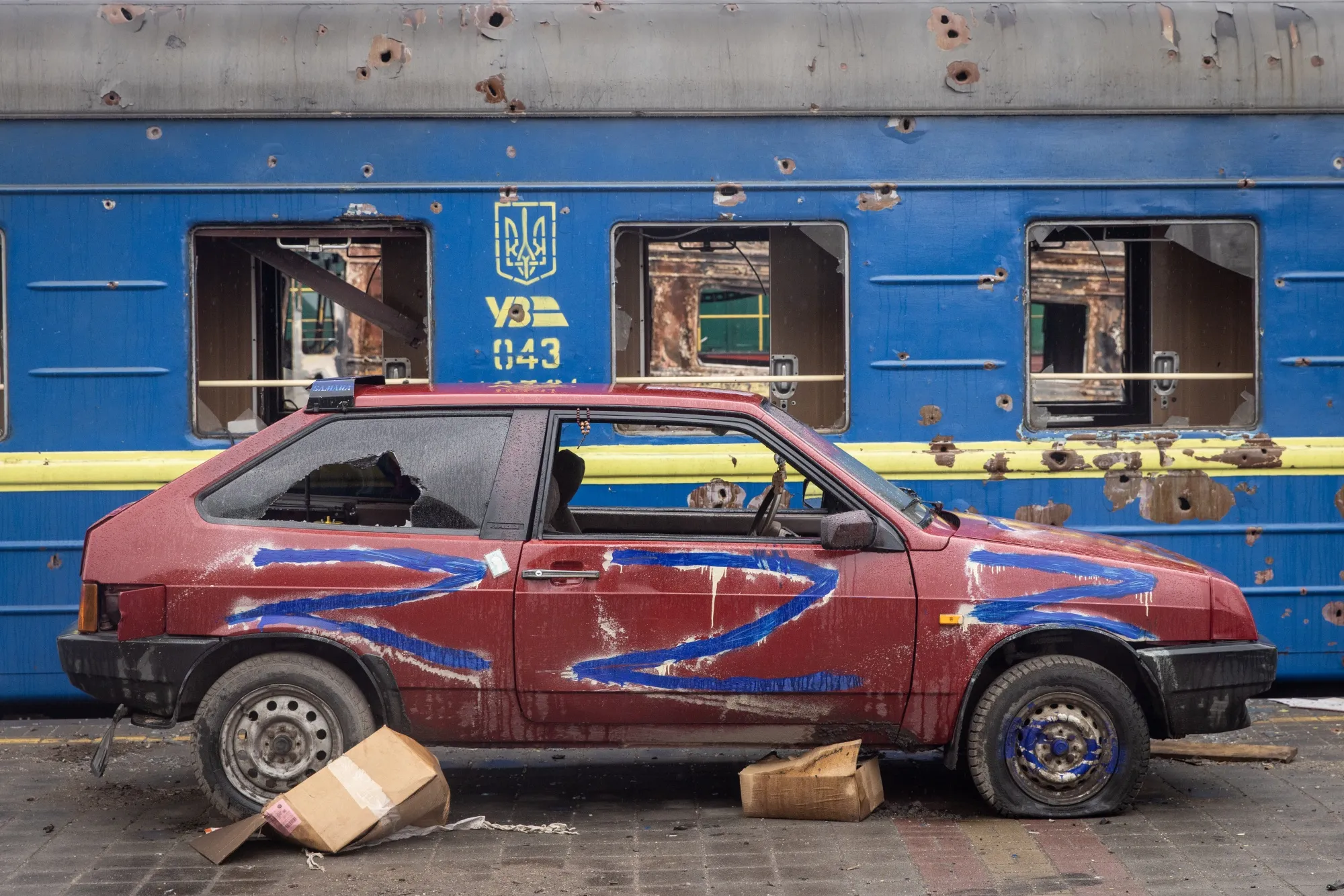
This is difficult because all our computer equipment was stolen by Russians, making administrative services very slow. Employees have assembled several computers from some spare parts, which makes it possible to type letters to send to charity organizations, but nothing more. Moreover, the whole database — salary calculations, accounting documentation, city council reports — has been shattered and turned upside down. We are trying to restore some payments through the treasury and banking system, but it’s not easy, as we have lost equipment, access and passwords. Difficult times are coming to Trostyanets — financially, morally and technically.
My working day now runs from 6 to midnight, usually without even time for a tea break. I receive hundreds of calls from people who need help, are looking for relatives, or are themselves offering the city help. I am also coordinating the work of city council members who have decided to stay in this area — together we’re now helping restore the city’s economy and work with the military to ensure community safety.
I am in constant movement, constant tension. Instead of blooming roses, I see destroyed objects, ruined infrastructure, people in a state of semi-shock, sappers removing mines, or the military taking out equipment or ammunition. This is nonstop, intense and sometimes dangerous work. I wear a bulletproof vest all day long, although I want to take it off all the time.
As for the future, our ability to go back to the pre-war state depends on how quickly we can return the city to regular working conditions. We need to give new housing to people whose homes have been destroyed, but now we don’t have the resources — they are staying with friends and acquaintances. They need to return to everyday life.
If we don’t do that immediately, people who have left Trostyanets may stay in western Ukraine, Poland or the Czech Republic forever. Businesspeople may decide that it’s not worth working here anymore. We need to give confidence to people that everything will work out. Investors, entrepreneurs and citizens need to see a confidently recovering community, and the mayor and city councils activities need to build that confidence.
If we manage to do that, I am sure both investors and citizens will return and rebuild the city. The task of the whole civilized world is to help them with this. Today, Ukraine is defending democracy for the world as a whole.